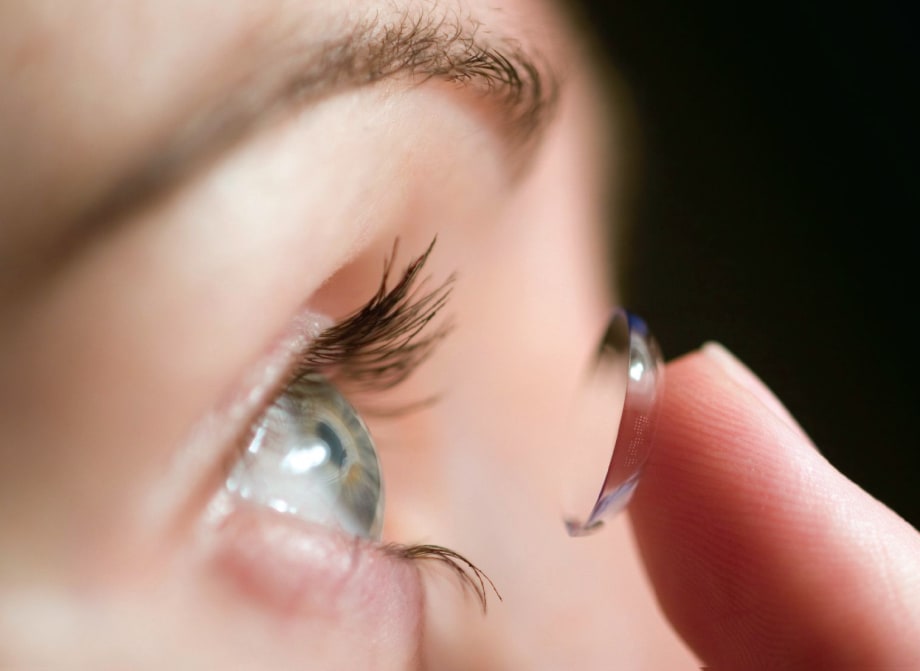
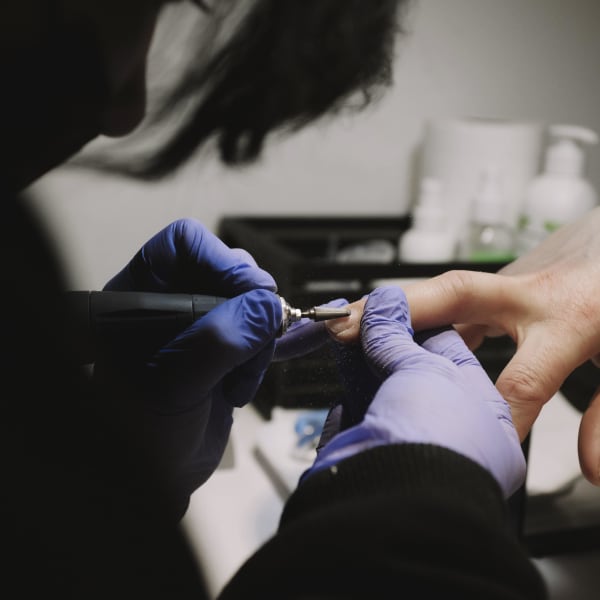
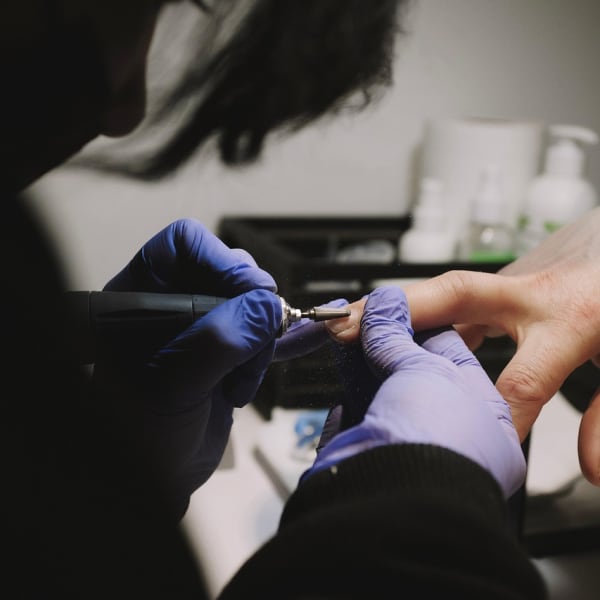
With filing dust, clippings, aerosol sprays, chemicals, and vapors making their way around the salon environment, wearing contact lenses while working can be potentially hazardous.
by Jenna Curry
May 1, 2008
4 min to read
How can you protect your eyesight? Contact lenses require special care, and once you start wearing them, your eyes become more susceptible to irritation and damage than ever before. Not only must you handle and maintain your lenses carefully, but you must be aware that the environment you work in could be your eyes’ worst enemy. Dust, flying clippings, and chemicals pose a threat to your eye health and the safety of your contacts.
Beauty professionals deal with potentially harmful chemicals and processes every day. Yet, unlike workers in other potentially hazardous industries, they are not required to meet certain safety standards, such as wearing eye protection.
Ad Loading...
“The eyes have to be protected from splashes, flying clippings, and other debris,” says Doug Schoon, chief scientific adviser for CND.
It is important for nail technicians to be aware of potential hazards and be especially meticulous about keeping their hands clean when handling lenses.
WHY IS IT RISKY?
Gas-permeable soft contact lenses are the most commonly worn type of contact lens. The lens material is very porous and actually attracts chemicals and dust.
“There is a tendency for these materials to associate chemically,” says Nellie Brown, director of Workplace Health & Safety Programs at Cornell University. “It’s just chemical nature.”
Ad Loading...
Because they are porous, soft lenses allow gases to pass through them to the surface of the eye, a function that is necessary so the lenses are softer, more flexible, and more comfortable. But they let chemical vapors, such as butyl acetate, toluene, and acetone, pass through to the eye as well, where they get trapped under the lens and cannot be easily cleaned away by the eye’s natural washing action.
Splashes and aerosols are also dangerous to contact lens wearers. Acid and alkaline solutions, found in primers, spray activators, and soaps, can do you harm wherever they land but are especially dangerous to eyes, where they may cause chemical burns and scarring. Acids sting and burn the moment they come in contact with your eye and most people will rinse them out at once just to get rid of the discomfort.
Alkaline solutions, on the other hand, may not irritate you at first, but they are dangerous and can cause damage if allowed to linger in the eye. Even if you rinse your eyes thoroughly, you should see an eye specialist immediately if you splash an alkaline or acid solution into your eye.
Dust is worse for contact lens wearers than for other people. Filings, clippings, and product particles that adhere to hands find their way into eyes, where they can irritate and scratch. No matter how much you want to, don’t rub your eyes. Rubbing can scratch the cornea or embed a minute particle in the eye. Abrasions and foreign matter can lead to infections and ulcerations of the cornea.[PAGEBREAK]
In terms of eye safety, the most dangerous parts of nail service for nail professionals are those that involve cleaning and disinfection, mixing and pouring of liquids, and improperly sealed or stored containers, says Schoon. The most dangerous substances are primers, adhesives, and disinfectants.
Ad Loading...
To protect yourself, he suggests using safety glasses, some of which can still be stylish. “Eye protection is important, but it doesn’t have to be safety goggles,” says Schoon. “There are wraparound-style safety glasses with sufficient splash protection for salon work, but they should be designed for this purpose.”
Eye doctors also recommend disposable (one-day-wear) or frequent replacement contact lenses. Since these lenses are replaced often, there is less time for substances such as protein, calcium, and lipids to build up in your lenses. The more frequently you replace your lenses, the healthier and more comfortable your eyes can be.
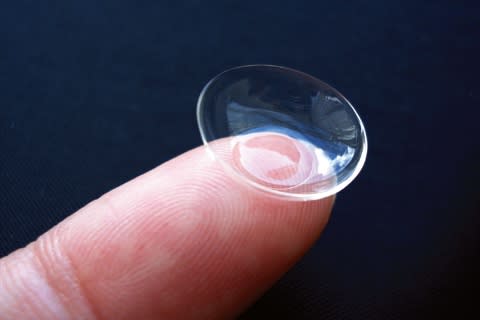
Eye doctors often recommend one-day-wear disposal lenses to keep eyes healthier.
PROPER LENS AND EYE CARE
Dr. Lincoln L. Manzi Jr., an eye specialist in Fountain Valley, Calif., urges immediate and plentiful irrigation of the eye if you do get something in it. To irrigate the eye properly, first remove the lens, then rinse the lens and wash out the eye with plenty of sterile irrigating solution, such as sterile eyewash or a commercial sterile saline solution.
Look carefully in a mirror to see that everything is out of the eye. Inspect the eyelid, too, then inspect the lenses for damage. Keep eyewash on hand, even if no salon employees wear contact lenses.
Ad Loading...
Many of the problems contact lens wearers encounter in the salon can be tied to inadequate ventilation. Though there are far more ventilation systems available for sale today than 10 years ago, Schoon says proper ventilation hasn’t improved much over the years. “All nail professionals should work with proper ventilation. It’s mandatory in my opinion,” he says.
For now, technicians and salon owners must evaluate the level of risk that is acceptable to them and improve working conditions. Be aware of the proper way to care for your lenses and your eyes because, as Cornell’s Brown notes, “The eyes are more easily damaged than the rest of our skin and a lot harder to replace.”
Uncured gel polish and microscopic e-file dust contain active acrylates that penetrate the skin, triggering permanent contact dermatitis. Learn the chemistry behind these irritants and how to protect your clients and yourself.
The Good Patch is a leading wearable wellness patch brand, offering wellness and skincare patches that support everyday needs including energy, sleep, relaxation and more.
Orthopedic PT reveals three daily exercises plus ergonomic advice that can help salon professionals avoid the aches and injuries caused by standing, bending and repetitive overhead work.
From acrylic monomers to airborne bio-dust, the air inside a nail salon carries risks most professionals never see coming. Aerovex Systems reveals the source-capture and room-purification strategies that are setting a new standard for salon safety.
Working in beauty doesn’t have to hurt. Learn how Somatic Movement helps hairstylists, lash artists, and other beauty pros release tension, improve posture, and extend their careers.
As a spa or salon professional, your clients expect more than just beauty—they expect safety, hygiene, and peace of mind. Fungal infections like Athlete’s Foot and Nail Fungus are more common than you think, especially in environments where tools and footbaths are reused without proper sanitation. This blog covers how to stop these issues before they start, using proven infection prevention strategies for salons and spas.
A federal initiative aimed at studying chemical exposure in nail salons has ended due to staffing and budget changes. Here’s what the project set out to do—and what its conclusion means for salon professionals.
For many people, a pedicure is a relaxing beauty ritual. But what most don’t realize is that this simple service, if done without proper hygiene and sanitation, can cause serious infections and long-term health issues.
Onycholysis is the separation of the nail plate from the nail bed. While it may look painful, it typically isn’t—at least not at first. But without proper care, this common nail disorder can lead to infections, deformities, and long-term damage.
Mckenzie Kool, Psychologist, MC, RPsych provides us with guidance on what may or not be helpful in speaking with someone who has suffered a significant loss.
Clients come to you to feel their best—not leave with a viral souvenir. Warts and cold sores can spread fast in busy salons, but a few smart habits make all the difference. Let’s talk about what’s really lurking in your salon (and how to kick it to the curb).
As Earth Day approaches, The Green Beauty Community Foundation and the Green Spa Network invite beauty pros to step forward and embrace sustainability through the Green Pledge--a powerful initiative designed by and for beauty industry leaders.
Don’t cancel Valentine’s Day altogether, urges Jill Palmquist. Instead, think of it as a (frilly, flowery, Champagne-bubbly) wake-up call to fall deeply in love with your own life.
Life coach and Culture Ambassador of Sam Villa, Andrew Carruthers, outlines how to tell if your burnout is temporary - or if it's time to make a bigger career change.