alopecia areata (al-oh-PEE-shah air-ee-AH-tah) n: a highly unpredictable, autoimmune skin disease resulting in the loss of hair on the scalp and elsewhere on the body. In rare instances, it affects the nails.
4 min to read
alopecia areata (al-oh-PEE-shah air-ee-AH-tah) n: a highly unpredictable, autoimmune skin disease resulting in the loss of hair on the scalp and elsewhere on the body. In rare instances, it affects the nails
According to the American Academy of Dermatology, “nearly 2% of the U.S. population (about four million people) will develop alopecia areata in their lifetime.” The cause of the disease is unknown, but the evidence is unmistakable. Entire patches of hair fall out as a result of the autoimmune system attacking the body’s hair follicles. Alopecia areata affects all ages and both genders. Though the disease is not hereditary, “one in five people with the disease has a family member who has it as well,” according to the National Institute of Health.
Because it is an autoimmune condition, other autoimmune issues may be present in a person suffering from alopecia areata, such as asthma, allergies, rheumatoid arthritis, or lupus. Overall, however, alopecia areata often attacks an otherwise healthy child or adult.
Ad Loading...
There are three types of alopecia areata. The common term “alopecia areata” is used when hair falls out of the scalp and leaves visible patches of baldness. “Alopecia areata totalis” is the term used for a total loss of hair on the scalp. “Alopecia areata universalis” refers to complete loss of hair on the scalp and body, including lashes, brows, beards, and, in some cases, even the thin, protective coat of hair over the whole body. “In all forms of alopecia areata, the hair follicles remain alive and are ready to resume normal hair production whenever they receive the appropriate signal. In all cases, hair re-growth may occur even without treatment, and even after many years,” according to the National Alopecia Areata Foundation (NAAF).
Autoimmune diseases have long stumped medical professionals. There are no hard and fast answers as to why the body’s immune system turns on itself and begins harming the body it’s meant to protect. Equally perplexing is what makes the immune system stop attacking itself and start operating correctly. Doctors don’t know why the condition begins; nor do they know what triggers the hair to grow back. It’s easy to imagine how frustrating this can be to alopecia areata sufferers. To complicate matters, alopecia areata has been known to cause hair loss and clear up, only to reappear and cause the trauma all over again.
No cure for alopecia areata exists. However, corticosteroids are used to treat milder cases of alopecia areata. Products that contain minoxidil, such as Rogaine, are also used. For more severe cases, doctors may choose a treatment known as “topical immunotherapy.” According to the NAAF, a chemical is applied on the area of the scalp that has experienced hair loss, and it produces “an allergic rash, or allergic contact dermatitis, that resembles poison oak or ivy.” It sounds itchy and miserable, and it is, but “approximately 40% of patients treated with topical immunotherapy will regrow scalp hair after about six months of treatment,” reports the NAAF. Alternative options, including supplements and acupuncture, have also been used to treat the condition.
Many people who suffer with alopecia areata benefit from consulting a therapist who can help them deal with the emotional and psychological trauma that accompanies hair loss. A therapist will be able to help them develop tools to deal with the overwhelming emotions that often accompany hair loss, such as grief, embarrassment, anger, loneliness, and depression. Wigs, scarves, and false eyelashes can help alopecia areata sufferers maintain a healthy, beautiful exterior, but often a professional is needed to help an alopecia areata sufferer come to terms with the internal conflict. Support groups also offer help in learning to deal with questions from strangers, how to develop a healthy self-image in a culture that highly values beauty, and how to handle alopecia areata at work and in relationships. The NAAF offers a network of support groups, conferences, and programs to help children and adults learn to live well with the disease.
Enhancements are not recommended when alopecia areata affects the nails.
WHAT’S A TECH TO DO?
Ad Loading...
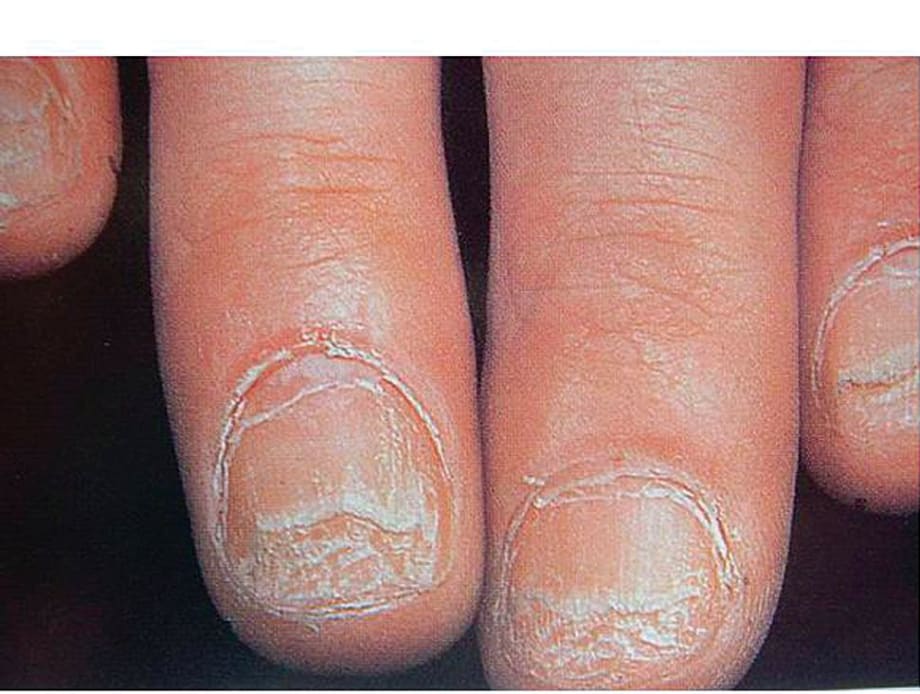
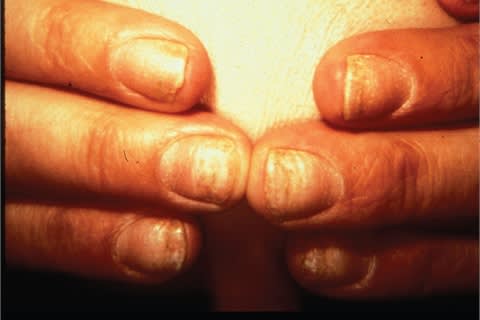
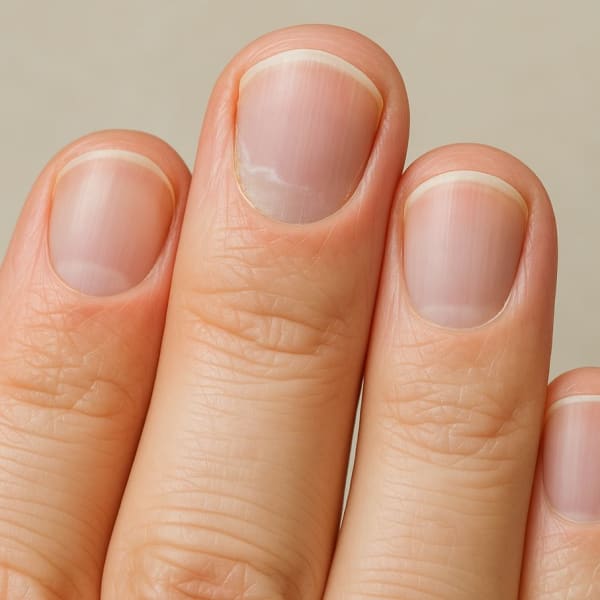
Very rarely alopecia areata will affect a client’s fingernails and toenails. When it does, it can be present on only one or two nails, or it can affect all 10 (or 20). In those rare cases when a client has alopecia areata that damages nails, don’t be alarmed. Alopecia areata is not at all contagious. As you can see from the photo, the nails look similar to nails you’ve seen on other clients — nails that can easily be beautified. However, don’t immediately try to remedy the appearance of the nails with enhancements. “I would not recommend nail enhancements,” says Lisa Butler, vice president of communications for the National Alopecia Areata Foundation (NAAF). Alopecia areata is unpredictable, and the condition of the nail could change. Enhancements would make it difficult for the client, and her doctor, to monitor the changes. Also, remember that a person suffering with alopecia areata has an immune system that’s working overtime, so it’s very sensitive. Techs work with chemicals that are considered to be allergens. Any product that touches the skin could cause a swift and negative allergic reaction. Instead, opt for a natural nail manicure with polish that is free from known reactors, such as formaldehyde. Butler says she would even opt to pass on polish, so be sure to talk with the client to see what her doctor recommends as her best option.
Uncured gel polish and microscopic e-file dust contain active acrylates that penetrate the skin, triggering permanent contact dermatitis. Learn the chemistry behind these irritants and how to protect your clients and yourself.
The Good Patch is a leading wearable wellness patch brand, offering wellness and skincare patches that support everyday needs including energy, sleep, relaxation and more.
Orthopedic PT reveals three daily exercises plus ergonomic advice that can help salon professionals avoid the aches and injuries caused by standing, bending and repetitive overhead work.
From acrylic monomers to airborne bio-dust, the air inside a nail salon carries risks most professionals never see coming. Aerovex Systems reveals the source-capture and room-purification strategies that are setting a new standard for salon safety.
Working in beauty doesn’t have to hurt. Learn how Somatic Movement helps hairstylists, lash artists, and other beauty pros release tension, improve posture, and extend their careers.
As a spa or salon professional, your clients expect more than just beauty—they expect safety, hygiene, and peace of mind. Fungal infections like Athlete’s Foot and Nail Fungus are more common than you think, especially in environments where tools and footbaths are reused without proper sanitation. This blog covers how to stop these issues before they start, using proven infection prevention strategies for salons and spas.
A federal initiative aimed at studying chemical exposure in nail salons has ended due to staffing and budget changes. Here’s what the project set out to do—and what its conclusion means for salon professionals.
For many people, a pedicure is a relaxing beauty ritual. But what most don’t realize is that this simple service, if done without proper hygiene and sanitation, can cause serious infections and long-term health issues.
Onycholysis is the separation of the nail plate from the nail bed. While it may look painful, it typically isn’t—at least not at first. But without proper care, this common nail disorder can lead to infections, deformities, and long-term damage.
Mckenzie Kool, Psychologist, MC, RPsych provides us with guidance on what may or not be helpful in speaking with someone who has suffered a significant loss.
Clients come to you to feel their best—not leave with a viral souvenir. Warts and cold sores can spread fast in busy salons, but a few smart habits make all the difference. Let’s talk about what’s really lurking in your salon (and how to kick it to the curb).
As Earth Day approaches, The Green Beauty Community Foundation and the Green Spa Network invite beauty pros to step forward and embrace sustainability through the Green Pledge--a powerful initiative designed by and for beauty industry leaders.
Don’t cancel Valentine’s Day altogether, urges Jill Palmquist. Instead, think of it as a (frilly, flowery, Champagne-bubbly) wake-up call to fall deeply in love with your own life.
Life coach and Culture Ambassador of Sam Villa, Andrew Carruthers, outlines how to tell if your burnout is temporary - or if it's time to make a bigger career change.