hammertoe: a bending and hardening of the joints of the second, third, fourth, or fifth toes
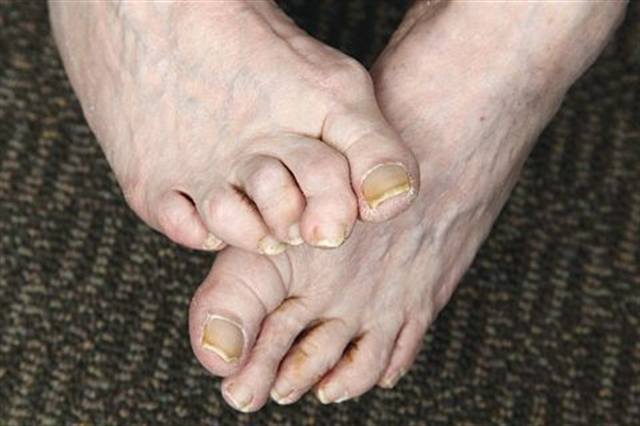
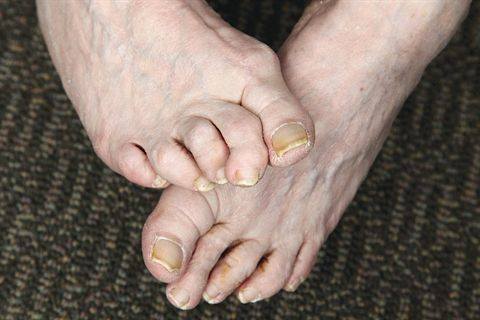
If you look down at your feet and you can’t see the tips of the toenails, you might suffer from hammertoe. Early signs of hammertoe are a bend in the joint of any toe except the big toe. The bend in the joint causes the top of the toe to appear to curl under as if it’s “hammering” into the floor.
Ad Loading...
“Hammertoe is an imbalance in the tendons and muscles,” says Dr. Jennifer Purvis, DPM, foot and ankle surgeon at Landmark Foot and Ankle Center in Lorton, Va. Over time, the imbalance in those tendons and muscles begins to cause the joint to bend, resulting in hammertoe.
But what causes the imbalance of the tendons and muscles in the first place so that they begin to pull and bend the joint? “A bad fitting shoe could be the cause,” says Dr. Purvis, “but it usually isn’t the primary cause.” Many people are genetically predisposed to hammertoe, and the condition begins to progress more quickly when they wear shoes that fit poorly — for example pointy toes, high heels, or shoes that are too short. Hammertoe may also be caused by damage to the joint as a result of trauma.
Hammertoe can affect any of the toes on the foot except the big toe, though the most common toe to suffer is the second one. While the smallest toe can be affected, the condition causes the toe to twist out to the side rather than to curl forward. Hammertoe is not very discriminating; it may appear on all four toes of the foot or on only one toe, depending on the cause. Dr. Purvis says that many times a person with a bunion will have a hammertoe on the second toe, because the bunion has pushed the big toe in and crowded the second toe. Often corns will develop on the skin covering the joints after the bent toe repeatedly rubs against the tops of shoes, and the area may become red and swollen.
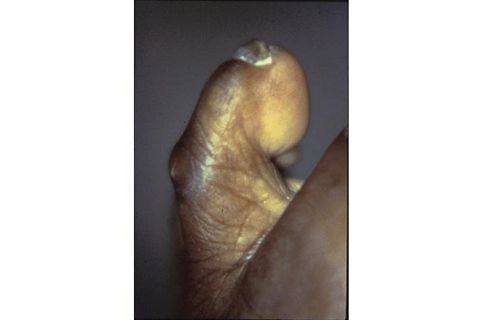
With hammertoe, the bend in the joint causes the top of the toe to appear to curl under as if it’s “hammering” into the floor.
The earlier a client seeks a doctor’s opinion, the better. Hammertoe is a progressive disease, which means that it will keep getting worse unless it’s treated. For mild cases of hammertoe, where the tendons and muscles are bending the joint but the joint isn’t rigid, doctors choose from a variety of treatments. If the toes are still mobile enough that they are able to stretch out and lay flat, the doctor will likely suggest a change of footwear. In addition, she may choose to treat the pain that may result from the condition. The doctor may prescribe pads to ease the pain of any corns and calluses, and medications ranging from ibuprofen to steroid injections for the inflammation and pain. Other options for non-surgical treatments include orthotic devices to help with the tendon and muscle imbalance or splinting to help realign the toe. Splinting devices come in a variety of shapes and sizes but the purpose of each is the same: to stretch the muscles and tendon and flatten the joint to remove the pain and pressure that comes from corns.
Ad Loading...
If these non-invasive treatments don’t work, or if the joint is rigid, a doctor’s only recourse may be to perform surgery. During the surgery, the doctor makes an incision and cuts the tendon to release it or moves the tendon away from or around the joint. “Sometimes part of the joint needs to be removed or the joint needs to be fused,” says Dr. Purvis. Each surgery is different in terms of what is needed to treat the hammertoe.
Normally after any foot surgery, patients use a surgical shoe for four to six weeks, but often the recovery from hammertoe surgery is more rapid than that, says Dr. Purvis. An unfortunate reality is that hammertoe can actually return even after surgery if a patient continues to make choices that will aggravate the situation. “Though doctors usually explain pretty clearly what needs to be done to avoid this,” says Dr. Purvis.
What’s a Tech to Do?
“If a nail technician suspects a client has hammertoe, she should recommend the condition be evaluated by a foot and ankle surgeon,” says Dr. Purvis. Early diagnosis always produces better results so alternative treatments can be attempted before the joint becomes rigid. “So many times a patient will wait until the joint is rigid. She will come in and ask what can be done, but because she’s waited so long, the only answer is surgery,” she says.
Dr. Purvis also suggests techs warn clients not to self-diagnose. Pads for the toes and corn cushions are available over the counter, so clients may be tempted to try them on their own before they visit a podiatrist. However, says Dr. Purvis, some types of hammertoe respond better to a specific pad, and the doctor would know which one a client would need, if any. She says techs should specifically warn clients against using the medicated corn cushions, because they may contain acid, which could be harmful.
Ad Loading...
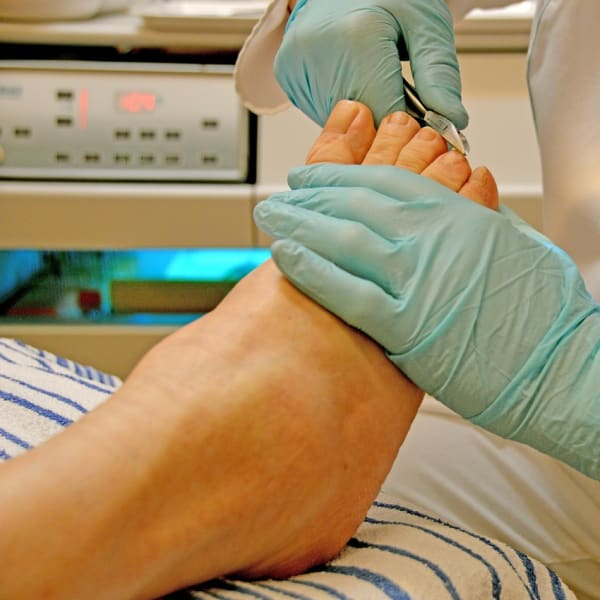
Techs may perform a pedicure as they normally would if the skin is not compromised in any way. However, if any sore has developed from the skin rubbing against the tops of the shoes or from the toe being crowded in the box of the shoes, the tech should recommend the client visit a doctor before performing services. “Especially with clients who have diabetes,” says Dr. Purvis. A diabetic patient may develop sores from the disfigurement of hammertoe, and techs will want an opinion from a doctor on how best to proceed with pedicures.
Uncured gel polish and microscopic e-file dust contain active acrylates that penetrate the skin, triggering permanent contact dermatitis. Learn the chemistry behind these irritants and how to protect your clients and yourself.
The Good Patch is a leading wearable wellness patch brand, offering wellness and skincare patches that support everyday needs including energy, sleep, relaxation and more.
Orthopedic PT reveals three daily exercises plus ergonomic advice that can help salon professionals avoid the aches and injuries caused by standing, bending and repetitive overhead work.
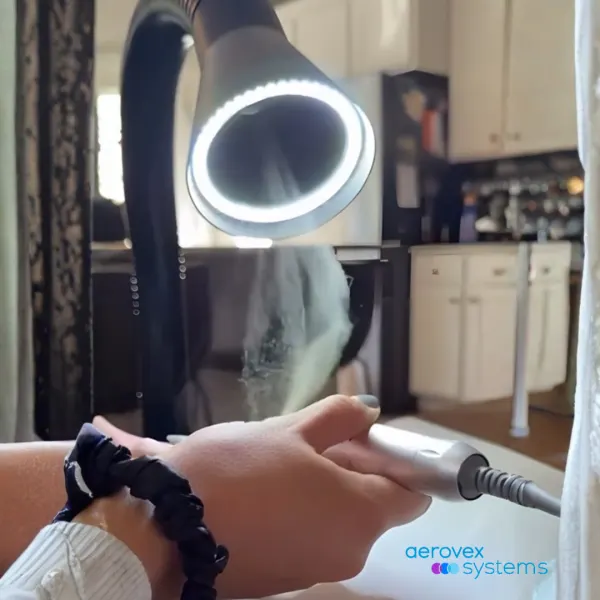
From acrylic monomers to airborne bio-dust, the air inside a nail salon carries risks most professionals never see coming. Aerovex Systems reveals the source-capture and room-purification strategies that are setting a new standard for salon safety.
Working in beauty doesn’t have to hurt. Learn how Somatic Movement helps hairstylists, lash artists, and other beauty pros release tension, improve posture, and extend their careers.
As a spa or salon professional, your clients expect more than just beauty—they expect safety, hygiene, and peace of mind. Fungal infections like Athlete’s Foot and Nail Fungus are more common than you think, especially in environments where tools and footbaths are reused without proper sanitation. This blog covers how to stop these issues before they start, using proven infection prevention strategies for salons and spas.
A federal initiative aimed at studying chemical exposure in nail salons has ended due to staffing and budget changes. Here’s what the project set out to do—and what its conclusion means for salon professionals.
For many people, a pedicure is a relaxing beauty ritual. But what most don’t realize is that this simple service, if done without proper hygiene and sanitation, can cause serious infections and long-term health issues.
Onycholysis is the separation of the nail plate from the nail bed. While it may look painful, it typically isn’t—at least not at first. But without proper care, this common nail disorder can lead to infections, deformities, and long-term damage.
Mckenzie Kool, Psychologist, MC, RPsych provides us with guidance on what may or not be helpful in speaking with someone who has suffered a significant loss.
Clients come to you to feel their best—not leave with a viral souvenir. Warts and cold sores can spread fast in busy salons, but a few smart habits make all the difference. Let’s talk about what’s really lurking in your salon (and how to kick it to the curb).
As Earth Day approaches, The Green Beauty Community Foundation and the Green Spa Network invite beauty pros to step forward and embrace sustainability through the Green Pledge--a powerful initiative designed by and for beauty industry leaders.
Don’t cancel Valentine’s Day altogether, urges Jill Palmquist. Instead, think of it as a (frilly, flowery, Champagne-bubbly) wake-up call to fall deeply in love with your own life.
Life coach and Culture Ambassador of Sam Villa, Andrew Carruthers, outlines how to tell if your burnout is temporary - or if it's time to make a bigger career change.