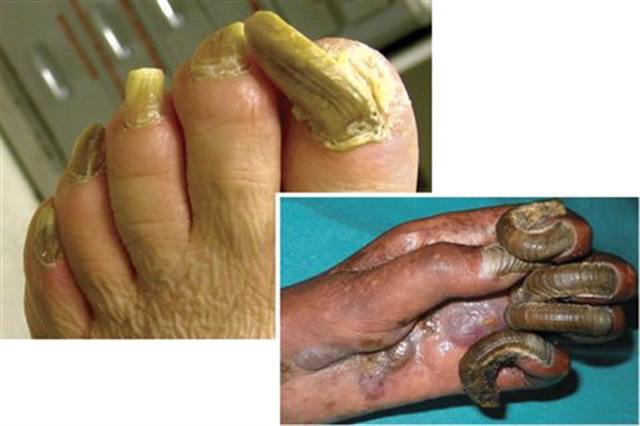
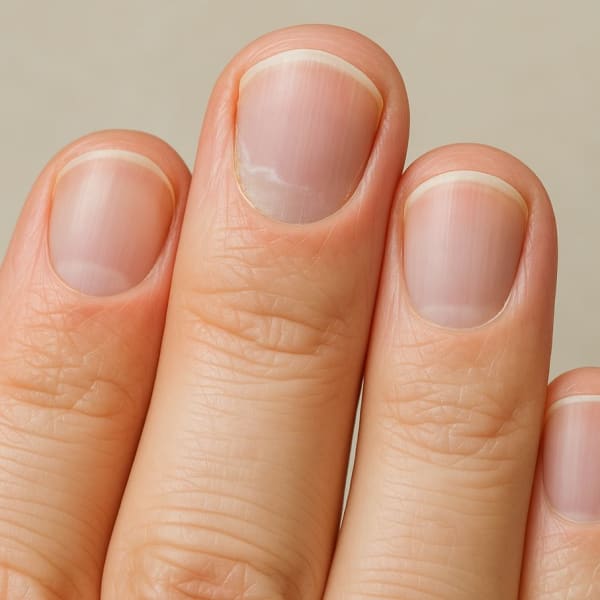
Onychogryphosis refers to nails that have thickened and developed a deep curve. Techs may be more familiar with the term “ram’s horn,” which is the common description given to this condition.
Onychogryphosis (or -gryposis), ŏn'ĭ-kō-grə-pō'sĭs excessive thickening and curving of the nails
When we describe the thick, curved nails of onychogryphosis, also called “ram’s horn,” we are not necessarily discussing the “glamour nails” that make news stories, though some of those exceedingly long nails do look like a ram’s horn. “The signs and symptoms of onychogryphosis include thickening, curving, discoloration, and debris beneath the nail,” says Dr. Carly Robbins, a podiatrist based in Hilliard, Ohio, and spokesperson for the American Podiatric Medical Association.
Ad Loading...
The curve of the nail damaged by onychogryphosis may appear at the free edge, wrapping around and under the finger, or it may start under, or at, the cuticle of the nail, causing the nail to jut out to the right or left at a severe angle. Onychogryphosis is more common in toenails than in fingernails, and when it does appear on the fingernails, it often affects only one nail, says Dr. Nuzhatun Nia, a dermatologist at Government Medical Center in Srinagar, India.
“Onychogryphosis is often caused by trauma or repetitive micro-trauma to the nail or matrix,” says Dr. Robbins. In toenails, this can be caused by something as common as ill-fitting shoes, she says. In extraordinary cases, such as the fingernails pictured on page 94, damage to the ulnar and median nerves is the initial cause. Those nerves supply impulses to the fingers and without the proper nerve supply, the nails worsen, especially with extended neglect.
It is possible for the thickened, rough nail to lacerate the nail bed. When the nail bed is damaged, ulcerations or sores can develop, creating an environment where infection can grow. “This is especially true in patients with loss of feeling in their feet,” says Dr. Robbins. This compounds the problem and increases the danger to the client.
“The pain and pressure of onychogryphosis can be similar to that of a fungal infection of the nails,” says Dr. Robbins. She says many times there is no way to distinguish between a fungal infection and onychogryphosis without taking a culture. Because of this, it’s best for a client to consult a physician to confirm the absence or presence of fungus. Once it is determined that no fungal infection exists, a client has a few options as to how to proceed. The first step is to eliminate pressure on the nail. “Apart from avoiding pressure and trauma to the nails, the best way to manage the nails is to keep them cut short and filed down,” says Dr. Robbins. In addition, topical medications that contain urea are sometimes prescribed to remove the thickness of the nail and to soften the tissue surrounding the nail.
“Treatment of the condition depends on the cause,” says Dr. Robbins. For example, direct trauma to an isolated nail or matrix can be permanent, and patients may opt to have the nail permanently removed. However, if the condition is caused by repetitive micro-trauma, such as from shoes or sports cleats, then avoiding the pressure can sometimes improve the condition. Dr. Robbins says onychogryphosis is rarely cured, but more commonly it is controlled.
Ad Loading...
When a patient opts to have the nail removed, doctors will surgically remove the nail at the root, and then chemically destroy the matrix so the nail won’t regrow, says Dr. Nia. The digit (either the finger or toe) will be without a nail, but smooth, healthy skin will grow where there was once a thick, damaged nail. Loss of the nail may be embarrassing at first, but the healed site can be more aesthetically pleasing, less painful, and less likely to become infected.
What’s a Tech to Do?
As we have already noted, onychogryphosis can appear to be a fungal infection. If a client develops a thick nail and standard filing doesn’t improve her condition, recommend that she consult a doctor to rule out the presence of fungus.
If a client comes in with an existing condition, be cautious. You might be tempted to beautify the nail by reducing the thickness, but you may cause small lacerations to the tender skin surrounding the nail. Additionally, the nail bed below may be compromised. It’s possible to think you are thinning out a thick nail, when in reality, you are causing small abrasions to damaged tissue.
“The patient would benefit from debridement (thinning the nail to reduce thickness),” says Dr. Robbins. “But there are risks, as there is often prominent soft tissue beneath the nail that can be cut.” Dr. Robbins says this puts the patient at an increased risk for infection. Because of that, she suggests the patient see a podiatrist before a nail tech performs a pedicure on the patient. In the same way, if the condition is present on the fingers, techs should insist upon a release from a dermatologist or other medical professional before manicuring the site.
Ad Loading...
Because it is more likely to be controlled than to be cured, the condition must be considered permanent. Artificial nails should not be considered as a solution to the problem. Enhancements will add weight to the nail. As the nail grows out, that weight increases pressure to the matrix, which is already likely to be damaged. In addition, if any damage exists to the surrounding tissue or to the nail bed, enhancement product may not adhere correctly. This opens the possibility of water or debris being trapped, which increases the likelihood of infection or fungus.
Instead, work with conservative measures to keep the nail trimmed and smooth. If the condition is advanced, a tech’s best advice is for the patient to seek a medical opinion. Often viewed as a trusted friend, a nail tech can play a vital role in assuring a client who has anxiety about removing the nail. It can be an emotional experience to think about having a nail permanently removed, but through empathy and education, nail techs can help clients realize that in the case of ram’s horn, it may be the best option.
Uncured gel polish and microscopic e-file dust contain active acrylates that penetrate the skin, triggering permanent contact dermatitis. Learn the chemistry behind these irritants and how to protect your clients and yourself.
The Good Patch is a leading wearable wellness patch brand, offering wellness and skincare patches that support everyday needs including energy, sleep, relaxation and more.
Orthopedic PT reveals three daily exercises plus ergonomic advice that can help salon professionals avoid the aches and injuries caused by standing, bending and repetitive overhead work.
From acrylic monomers to airborne bio-dust, the air inside a nail salon carries risks most professionals never see coming. Aerovex Systems reveals the source-capture and room-purification strategies that are setting a new standard for salon safety.
Working in beauty doesn’t have to hurt. Learn how Somatic Movement helps hairstylists, lash artists, and other beauty pros release tension, improve posture, and extend their careers.
As a spa or salon professional, your clients expect more than just beauty—they expect safety, hygiene, and peace of mind. Fungal infections like Athlete’s Foot and Nail Fungus are more common than you think, especially in environments where tools and footbaths are reused without proper sanitation. This blog covers how to stop these issues before they start, using proven infection prevention strategies for salons and spas.
A federal initiative aimed at studying chemical exposure in nail salons has ended due to staffing and budget changes. Here’s what the project set out to do—and what its conclusion means for salon professionals.
For many people, a pedicure is a relaxing beauty ritual. But what most don’t realize is that this simple service, if done without proper hygiene and sanitation, can cause serious infections and long-term health issues.
Onycholysis is the separation of the nail plate from the nail bed. While it may look painful, it typically isn’t—at least not at first. But without proper care, this common nail disorder can lead to infections, deformities, and long-term damage.
Mckenzie Kool, Psychologist, MC, RPsych provides us with guidance on what may or not be helpful in speaking with someone who has suffered a significant loss.
Clients come to you to feel their best—not leave with a viral souvenir. Warts and cold sores can spread fast in busy salons, but a few smart habits make all the difference. Let’s talk about what’s really lurking in your salon (and how to kick it to the curb).
As Earth Day approaches, The Green Beauty Community Foundation and the Green Spa Network invite beauty pros to step forward and embrace sustainability through the Green Pledge--a powerful initiative designed by and for beauty industry leaders.
Don’t cancel Valentine’s Day altogether, urges Jill Palmquist. Instead, think of it as a (frilly, flowery, Champagne-bubbly) wake-up call to fall deeply in love with your own life.
Life coach and Culture Ambassador of Sam Villa, Andrew Carruthers, outlines how to tell if your burnout is temporary - or if it's time to make a bigger career change.