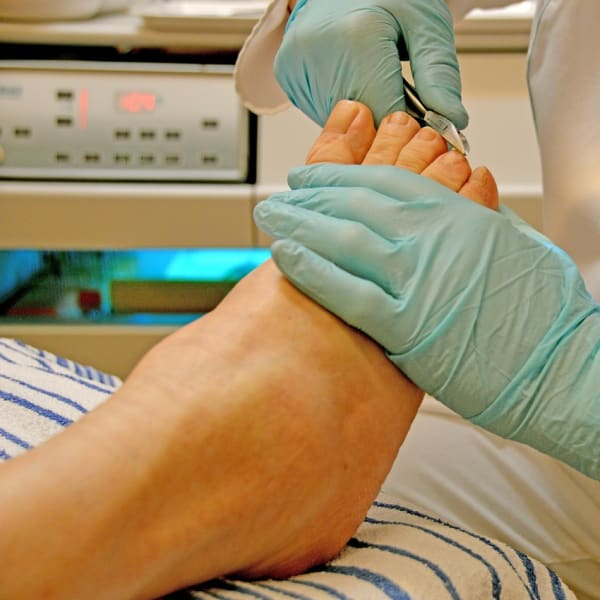
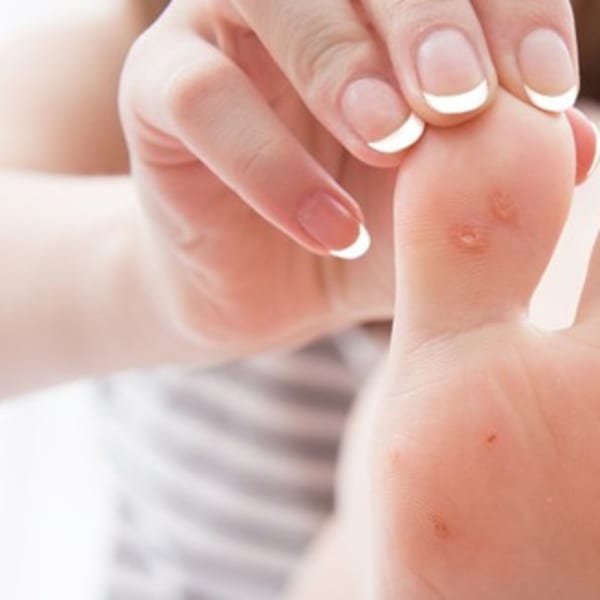
Heel pain is the most common foot complaint that sends people to their doctors. Your pedicure service can give relief to heel pain sufferers through communication, warming treatments, and massage.
What It Is: The most common cause of heel pain among Americans is plantar fasciitis, a stress-related tearing of the plantar fascia — which is Latin for “bottom tissue.” That’s the ropey connective tissue on the bottom of the foot that stretches from the heel to the toes, giving support to the arch.
This tissue works with the Achilles tendon, which extends from the back of the heel bone up to the calf of the lower leg. Together, they create a pulley-and-bowstring mechanism that propels us forward as we walk.
If you press your weight down on one foot right now, you can feel the plantar fascia bearing the burden. It stretches like a bow just under the skin. You also can feel the Achilles tendon pulled tight at the back of the heel.
Now pull up your heel so the weight goes to the ball of the foot. Feel how the plantar fascia gets even tighter, especially by the heel (that’s the area of most stress). Feel also how the Achilles “pulley” brings the heel up toward the calf.
It’s the plantar fascia that puts a spring in your step, a bounce in your boogie.
But this tough tissue also takes a tremendous amount of stress at the moment when your weight moves from the back foot to the front foot. The force can be equal to six or seven times your body weight! When too much stress is put on the foot over and over, the fascia gets the “-itis.”
This Latin ending means “inflammation.” But it’s really a small tear that results from repeated little stresses, or microtraumas, to the fascia. Heel spurs are often related to plantar fasciitis, but not always. They are growths of soft, bendable bone that grow out from the heel where the plantar fascia inserts into the bone. They usually develop on the bottom, front, or side of the heel in an L-shape.
Symptoms: People with plantar fasciitis usually feel pain somewhere on the heel itself, according to a reader survey on the website heelspurs.com, operated by pain sufferer Scott Roberts. But people may feel pain almost anywhere along the fascia, and may feel it in more than one spot.
Typically, their feet hurt when they first wake up in the morning. That’s probably because the muscles in the foot and leg have tightened up overnight. The first steps irritate the little tear on the fascia and are painful. But the pain usually goes away after a few minutes. (It helps to massage the feet in bed before stepping out.)
When the pain is caused by over-exercising or not warming up beforehand, the pain may occur a day or two afterward. That sometimes makes it hard to relate the pain to the exercise, Washington, D.C., podiatrist Arnold Ravick says. “Active exercise causes the tendons to get tighter,” the podiatrist says. “You need to pull the tendon very gently.”
But too much stretching can have the same effect. For his patients who already feel pain, he cautions them to stretch moderately after the initial pain eases.
Heel spurs don’t necessarily cause pain. Many people have them and don’t even know it. “I have a patient with a two-inch spur and no symptoms,” Ravick says. A client won’t usually know she has a heel spur unless there are some symptoms, or she gets an X-ray taken for some other reason. It takes years and years of pressure for the bone to form.”
Causes: The incidence of heel pain has zoomed in the last 10 years, Ravick says. Experts theorize the increase is related to Americans’ growing heavier and more sedentary. On heelspurs.com, a reader survey showed that the page’s visitors were twice as likely as average Americans to be obese.
Rapid weight gain is another cause. Nail technician Meg Petrucelli-Schulcz with Currie Hair, Skin & Nails in Glenn Mills, Pa., sees heel pain among her clients who put on pounds quickly with pregnancy.
Athletes, mail carriers, waitresses, and others who work on their feet also are candidates. Anyone who is usually sedentary and then suddenly starts exercising without warming up and stretching first can also stress the plantar fascia and develop heel pain.
Doctors say the stress is created when the calf muscle and the Achilles tendon are tight. They don’t release properly during the pulley-and-bowstring action. That puts extra stress on the plantar fascia until it eventually starts to tear.
Tightness can result from many factors, including lack of exercise, too much activity, lack of stretching, or wearing high-heeled shoes on a daily basis. Heel spurs develop over time in response to repeated stress on the plantar fascia. It’s often the same kind of stress as that which causes plantar fasciitis — chronic tightness in the calves or Achilles tendon, Ravick says. Even if a person develops a spur, she may not develop plantar fasciitis.
How To Treat It: Doctors recommend a variety of treatments for plantar fasciitis. These include rest, gentle stretching, taping the foot to take the pressure off the fascia, using ice or heat therapy, wearing shoes with good arch support that bend across the toes, losing weight, taking shorter steps, avoiding walking barefoot, and using commercially available shoe inserts or custom inserts called orthotics.
Many of these treatments also work for heel spurs. More drastic measures include corticosteroid injections, surgery, and electric shock wave therapy.
However, the value of any particular treatment is unclear. “In more than 80% of patients, the symptoms will resolve within a year, regardless of therapy,” wrote Dr. Rachelle Buchbinder in a study published in the New England Journal of Medicine.
Your pedicure service, however, can be a definite source of relief. Begin by asking your client about her daily habits, suggests massage therapist Michelle Hocking of Collections Salon & Day Spa in San Diego. For example:
• Does the client feel the pain first thing in the morning when getting out of bed?
• Has she put on weight recently?
• What kind of work does the client do? Has she started a new exercise regimen after being sedentary? Does she stretch out and warm up first?
• If the client already exercises, has she changed anything, such as the terrain she jogs on?
• What kind of shoes does she wear on a regular basis? Do they have good arch support?
“I share some of my knowledge with the client, with reading from the Internet or elsewhere,” says Petrucelli-Schulcz, a tech for 14 years. “Give the client a little bit of advice and opinion, in a tactful way. Encourage her to seek assistance in getting the problem solved.
“Of course, never try to diagnose a client,” she adds. “We’re not doctors. We’re here for the pampering and the well-being of the individual.”
In the spa’s foot bath, Hocking likes to use either bath salts or milk products. An extended massage of the feet and calves stretches the plantar fascia, reduces swelling, and breaks up acids. “I think massage therapy works really well with plantar fasciitis,” podiatrist Ravick says.
Petrucelli-Schulcz suggests a penetrating oil to moisturize the skin. “The key ingredients for a massage oil or lotion are peppermint and menthol. They’re cool and refreshing,” says Hocking, who has been a therapist for three years.
Try following the spa experience with a paraffin dip, Petrucelli-Schulcz suggests. Like the heat of the water, the hot wax soothes chronic pain.
Any warming service can be followed by a cooling service to increase circulation in the foot. Ravick suggests you end with another warming service to avoid tightening up the muscles again.
Try following the hot spa or wax treatment with a cool towel wrapped around the feet. Hocking likes to wrap the cool towel with another cotton or wool towel for insulation, and leaves the client to rest for 30 minutes. Or, try a cooling masque, Petrucelli-Schulcz suggests.
Considerations for Nail Techs: When massaging the foot, be alert to sensitive areas. “With a client who’s a little more fragile, I might go lighter with the massage,” Petrucelli-Schulcz says. “I’ll massage a little longer and more up on the calf area and the top of the foot. I try to stay away from the specific area of the pain.”
You may find that a client with heel pain also feels pressure on the leg all the way to the hips, as her body compensates for the pain. When you see pedicure clients with heel pain, Ravick suggests the following:
• Ask questions about their exercise habits and whether they have put on weight recently.
• Take care with the foot position.
• If you don’t use the large pedicure thrones, arrange your service so the client can move her feet or get up every few minutes to relieve pressure on the fascia.
• Foot baths feel great, but don’t get the water too hot.
• Gently massage the foot and lower leg, with attention to the calf muscle and Achilles tendon.
• Be alert for signs of tenderness or pain, and back off from those areas or ease up on your pressure.
Other Causes of Heel Pain: Plantar fasciitis is the most common cause of heel pain, but there are many more. They include:
• Fatty heel pad is worn or thin
• Bone bruise
• Bone infection
• Bone fracture
• Rheumatoid arthritis
• Bursitis
• Pinched nerve
• Inflammatory joint disease
• Bone cancer
If a client complains of heel pain, suggest she see a doctor to find the cause. Early treatment is always best.
Foot Massage for Heel Pain Sufferers
Michelle Hocking, a massage therapist at Collections Salon and Day Spas in San Diego, sees a number of clients with heel pain. She suggests the following revitalizing foot massage to specifically benefit clients with heel pain.
1. Start with bath salts and aromatherapy fragrances in the pedicure spa. “Epsom salts or anything that says ‘Dead Sea salts’ are great,” Hocking says. Soak at least 10 minutes.
2. Dry the foot and apply oil. Lightly massage the top of the foot between the metatarsal bones. Deepen the strokes, depending on the amount of resistance or tenderness.
• DON’T put pressure on the top of the foot while the foot's on a flat surface.
• DO put a rolled towel under the arch to keep the pressure off the fascia.
3. Use your thumbs to gently stretch the fascia. Start at the center. Work in three lines — center, left, and right — to get the width and length of all branches of the fascia. Work the area beneath the balls of the toes and stretch the toes upward. “If I see the client wears five-inch stilettos, I'll do more toe stretching for that person,” Hocking says.
4. Place the fleshy sides of your palms beneath the ankle bone. Apply light pressure in a gentle back-and-forth movement to create friction, but don’t be brisk. Or use your fingertips to work around the ankle bone. Don’t go too deep.
5. For the leg massage, hold the upper foot in one hand and cup the heel with the other. Gently flex and extend the foot, while massaging up the leg with your supporting hand. Start where you can feel the Achilles tendon where it joins the heel bone. Work the leg with the foot in both the flexed and extended positions. Work deeply and vigorously up to the thick area of the calf, then stroke lightly to your beginning point. Do this three times to restore movement to the fascia.