No one wants to believe they will fall victim to an accident or illness that prevents them from earning an income for a long period of time, but statistics show it will happen to three in 10 of us. Disability insurance protects your most valuable asset — your ability to earn an income and provide for yourself and your family.
by Jill Wright
August 1, 2006
7 min to read
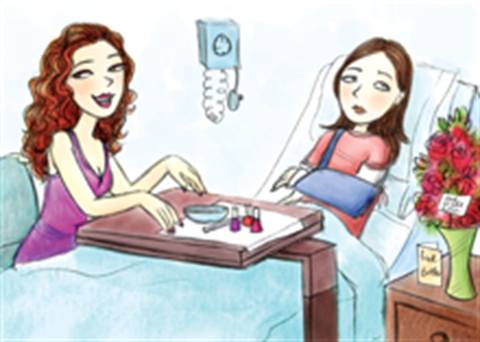
Right now, I have two salon clients who are disabled and cannot work. One was a self-employed psychotherapist and the other was an emergency room nurse. One had a disability policy and one did not. The psychotherapist has been off work for five months with an as-yet undiagnosed illness. She’s lost 75 pounds and is taking several pain medications. Since she was the main breadwinner, her family is struggling to meet its financial obligations. They’ve had to borrow money from family members to keep afloat. Soon she will have to face selling her car and new home. Her clients have had to take their business elsewhere, so the practice that she spent so many years building is now slowly eroding. “I could just kick myself for not having disability insurance,” she told me when I saw her recently.
The nurse client has a disability policy through her work. She has been off work since April 2005 after suffering for years with excruciating back pain. She’s had 11 back surgeries and lives with a morphine pump inside her to help control her pain. “If I didn’t have that policy I would’ve lost everything,” she told me. Still all is not rosy. She’s decided to sell her house and downsize into a smaller one while she hopes to be approved for social security disability benefits. Her first application has been turned down and her lawyer has filed an appeal.
Ad Loading...
We all know someone — a client, friend, or relative — who has had an accident or illness befall them. Sometimes it’s serious enough that they can’t work for a period of time, if ever again. Members of our industry are particularly vulnerable financially. As salon owners and booth renters, our clients are our livelihood. If we take an extended amount of time off, we may not have a business to go back to. Salon employees are also at risk. Most salons are too small to offer benefits that include access to group disability insurance. While almost all states require business owners to have workers’ compensation insurance, these policies only pay for illness or disability that are job-related.
Are you prepared in the event of an accident or illness to pay your personal bills without your paycheck? How will you keep your business afloat? And how long can you afford to do this?
Like dental work and taxes, insurance is often viewed as a necessary evil, but most of us would agree it’s better to have it and not need it, than need it and not have it. You would not hesitate to insure your car or your house, but protecting your most valuable asset — your ability to earn an income — is often overlooked, according to Carol Bates, a veteran sales representative with Mutual of Omaha Insurance Company. Bates stresses the importance of having either long-term or short-term disability insurance. She told me a story of a client who is a stylist and salon owner. Since there’d been a rash of hold-ups in his area, one night as he was closing up the salon, he decided to carry a gun.
Unfortunately, it accidentally discharged and shot him in the leg. He was taken by ambulance to the emergency room and was unable to work for about a year. Needless to say, he had unexpected medical bills and no personal income. Sixteen months went by before he even remembered he’d bought a disability policy and quickly phoned Bates to determine if his policy was still valid. After reviewing his medical records, his policy paid him for all the time he’d lost while he couldn’t work. This may see a bit extreme, but even something as minor as a broken arm could put you out of work for a period of time.
The Long and the Short of It There are two kinds of disability insurance, short-term and long-term. Short term does exactly what it says. It pays for a short period of time, usually one year or less. The waiting period (also called the elimination period) is the period from the date of injury or illness until the time that your policy begins paying. Typically these types of policies have either no waiting period or a two-week waiting period. The longer the waiting period, the lower your premium will be. Long-term disability insurance pays benefits for a longer period of time — two years on average — and the waiting period is usually 60-90 days. A shorter waiting period would mean higher premiums, since you’d be more likely to make claims for minor occurrences. You can find long-term policies that pay out until age 65.
Ad Loading...
Large employers sometimes offer short- and long-term disability as an optional benefit. Five states — California, Rhode Island, New Jersey, New York, and Hawaii — offer some sort of temporary disability programs available to all workers. If you are not in these states or covered by your employer, it’s up to you to provide your own coverage.
The Pay Off Both long- and short-term disability policies normally pay out between 60% to 70% of your income and are not taxed if you pay the premium yourself (as opposed to an employer paying it). The amount you receive is based on the bottom line of your Schedule C tax form if you are self-employed, which means that it is based on what you claim for your net income, before taxes but after business expenses.
The cost of the insurance is determined by several factors, including your age, health, status as a smoker, etc. Mutual of Omaha’s Bates ran a comparison quote using data from NAILS 2005-2006 Big Book to determine the average nail tech’s age (38.1 years old) and earnings ($2,500 per month). A typical short-term policy would pay $1,600 per month for six months, after a 14-day waiting period. The premium would run around $68.49 per month. A long-term policy with the same criteria would pay $1,600 per month for two years, after a 90-day waiting period. This would cost only $52.38 per month.
Two years is the typical amount of time that it takes for the Social Security Administration to finally approve someone for disability benefits. Can you afford to be without an income for that period of time? “If the answer is yes, then maybe you don’t need disability insurance,” says Bates. “Maybe your significant other is the main breadwinner and you only work for the extras. But most people spend what they earn. Are you prepared to do without all those little extras that make life comfortable?”
A Policy for Owners For salon owners, there is also a type of insurance called a “business overhead expense” (BOE) policy. This policy will pay all of your legitimate business expenses while you are unable to work. To determine how much coverage you need you’ll have to add up your salon expenses including rent/mortgage, utilities, taxes, receptionist salary, cleaning service, etc. Backbar items and retail cannot be claimed.
Ad Loading...
Look at last year’s taxes to get an idea of your expenses. Then buy a policy that covers you adequately. You can buy coverage for one year or 18 months, with a typical 30-day waiting period. Angel Bailey, owner of Angel’s Salon in Bowling Green, Ky., had such a policy in place when she became ill after a trip to New York. She was hospitalized with the worst form of E. coli, was devastatingly ill for many months, and unable to work at her salon. Her policy paid her $1,500 a month for one year after her 30-day waiting period and her premium cost around $44 per month. She’d only had her policy for a little more than a year when she suddenly needed it.
As a salon owner and working nail tech, the ideal scenario is to have both the BOE policy and a long-term disability policy. That way your business expenses are paid so you can continue operating your salon, plus your personal expenses are covered so you can continue to afford your home, food, and other living necessities. Insurance can be confusing and boring, so we put it off, but it can also be affordable and gives the insured peace of mind. When interviewing agents you should look for one who will explain everything thoroughly. Also, never purchase anything that you don’t understand.
Each of us needs to evaluate our situation and take the necessary steps to be prepared because, as I personally found out in November 1997, you never know when a driver will crash into you causing permanent damage to your hand! As a result of the accident, I missed months of work and my complete recovery took years. Often I worked when I really shouldn’t have since we had bills to pay. Thankfully, I was able to stay in the nail business. But now I have a disability policy, just in case.
— Jill Wright is the owner of Jill Wright Spa for Nails in Bowling Green, Ky.
Uncured gel polish and microscopic e-file dust contain active acrylates that penetrate the skin, triggering permanent contact dermatitis. Learn the chemistry behind these irritants and how to protect your clients and yourself.
The Good Patch is a leading wearable wellness patch brand, offering wellness and skincare patches that support everyday needs including energy, sleep, relaxation and more.
Orthopedic PT reveals three daily exercises plus ergonomic advice that can help salon professionals avoid the aches and injuries caused by standing, bending and repetitive overhead work.
From acrylic monomers to airborne bio-dust, the air inside a nail salon carries risks most professionals never see coming. Aerovex Systems reveals the source-capture and room-purification strategies that are setting a new standard for salon safety.
Working in beauty doesn’t have to hurt. Learn how Somatic Movement helps hairstylists, lash artists, and other beauty pros release tension, improve posture, and extend their careers.
As a spa or salon professional, your clients expect more than just beauty—they expect safety, hygiene, and peace of mind. Fungal infections like Athlete’s Foot and Nail Fungus are more common than you think, especially in environments where tools and footbaths are reused without proper sanitation. This blog covers how to stop these issues before they start, using proven infection prevention strategies for salons and spas.
A federal initiative aimed at studying chemical exposure in nail salons has ended due to staffing and budget changes. Here’s what the project set out to do—and what its conclusion means for salon professionals.
For many people, a pedicure is a relaxing beauty ritual. But what most don’t realize is that this simple service, if done without proper hygiene and sanitation, can cause serious infections and long-term health issues.
Onycholysis is the separation of the nail plate from the nail bed. While it may look painful, it typically isn’t—at least not at first. But without proper care, this common nail disorder can lead to infections, deformities, and long-term damage.
Mckenzie Kool, Psychologist, MC, RPsych provides us with guidance on what may or not be helpful in speaking with someone who has suffered a significant loss.
Clients come to you to feel their best—not leave with a viral souvenir. Warts and cold sores can spread fast in busy salons, but a few smart habits make all the difference. Let’s talk about what’s really lurking in your salon (and how to kick it to the curb).
As Earth Day approaches, The Green Beauty Community Foundation and the Green Spa Network invite beauty pros to step forward and embrace sustainability through the Green Pledge--a powerful initiative designed by and for beauty industry leaders.
Don’t cancel Valentine’s Day altogether, urges Jill Palmquist. Instead, think of it as a (frilly, flowery, Champagne-bubbly) wake-up call to fall deeply in love with your own life.
Life coach and Culture Ambassador of Sam Villa, Andrew Carruthers, outlines how to tell if your burnout is temporary - or if it's time to make a bigger career change.