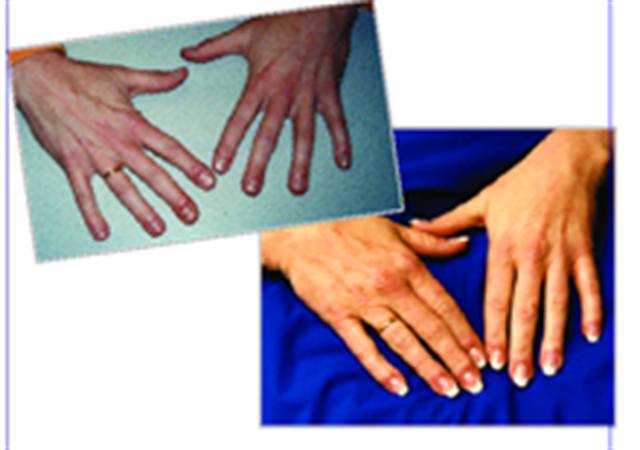
Like any habit, biting the nails is tough to stop. Some people never completely conquer the urge. But you can help, with a regular program of manicures and a supportive attitude. Here are two programs you can try — tailor them to the needs of your women, men, and children clients.
by Trina Kleist
July 1, 2005
10 min to read
Lucy Harris was 15 years old and a severe nail-biter when her desperate mother took her to a nail salon for help.
“The eagle-clawed owner took one look at my stumps and declared in a very loud voice that I should try and grow a little nail for the acrylics to adhere to,” says Harris, now grown and living in London. “I can recall crying with embarrassment and shame. I have never ventured back.”
Ad Loading...
That salon owner didn’t know the many ways a well-trained technician can help!
Weekly manicure appointments can create a support system and a way of monitoring your nail biter’s goals. Your scrupulous care of her nails and cuticles can create — perhaps for the first time — the realization that her hands can be beautiful. You also have the chance to educate her — or him — about home nail care that can help kick the habit.
Big Group, Loyal Clients
Nail biting and cuticle picking can start early, and may be learned from other biters and pickers. At least a quarter of pre-schoolers, nearly half of teenagers and two out of 10 young adults bite and chew their nails. Biters generally taper off the habit by their thirties, though 5% of older adults still gnaw their digits.
Despite this huge population, few salons offer services tailored to nail biters’ needs.
Ad Loading...
Nail tech Terri Taricco built up two salons in Massachusetts by focusing on nail biters.
“Other salons turn them away,” says Taricco, who now is a marketing director for the Texas-based hair-styling equipment maker Helen of Troy. “I used to run ads saying we specialized in nail biters. We would get every nail-biter in town.”
Taricco enjoyed working with nail biters because their nails are often deformed. “They’re not easy to do, and it’s a challenge to make them look nice,” she recalls.
Techs generally have two ways of helping these clients — a natural-nails program to let the nails grow out, or an enhancement system that protects the nails while they grow (with or without adding length, and with or without tips). You may want to combine elements from each to tailor your service to each client’s needs.
Take into consideration the client’s age and lifestyle. “I don’t try to sell the client enhancements if she’s 14 and plays volleyball,” laughs Victoria Yost, owner of The Nail Box in Fond-du-Lac, Wis.
Ad Loading...
Every program should include these steps:
• Keep the nails and cuticles perfectly smooth; rough edges and ragged cuticles stir the urge to bite and pick.
• Educate your client about basic nail care. She may not know that nails can harbor germs, that biting can lead to yeast and bacterial infections, that it can cause permanent deformities, or how to hold and use a nail file.
• Make moisturizing and cuticle care part of the client’s daily routine.
• Set small goals for each week, such as reducing the amount of scabbing or the number of nails bitten.
Ad Loading...
• Make regular and frequent appointments to keep your client on track.
• A pre-paid program can increase client commitment.
“If you teach people how to be successful themselves, they’re going to refer people back to you,” Yost has found.
First, Attention to Cuticles
For any program, pay careful attention to your client’s cuticles.
Ad Loading...
Most nail biters and pickers neglect their hands. As a result, the skin is often dry and the cuticles grow long over the nail. Those cuticles are typically a mess.
Taricco suggests the first appointment include a paraffin dip. The wax will soften the cuticles so you can gently push them back. Taricco has found overgrowth of as much as half an inch among her biters. In addition, instruct your client to push back the cuticles after every shower to keep them off the nail plates.
If your client insists on going straight to enhancements before her nails have grown out, schedule the wax dip separately, two or three days ahead of the nails appointment. It’s too much work on the sensitive nails for one session, Taricco warns.
Weekly, Natural-Nails Program
A four-week program of weekly visits that focus on the natural nails can help your biters and pickers get started. This program works great for children and men.
Ad Loading...
“My worst three clients all came back very excited about their results,” Yost says. After following her program, “they all had beautiful nails. I’ve gained a great clientele with this system.”
For the first appointment, Yost gives a complete manicure with a soak and exfoliation. She follows with a therapeutic moisturizer to repair the skin and cuticles. After careful shaping and prepping, she applies a nourishing base coat. Sometimes, the client may want a pale polish. Yost follows with a strengthening top coat.
Yost spends up to 15 minutes talking about nail health and how to care for the nails at home. She sells the top coat and an emollient nail oil, and teaches the client to apply them daily at home.
“Make sure they’re never out of product,” Yost advises.
In the following two weeks, Yost offers a “mini-manicure” lasting about 15 minutes, for a very affordable fee. She simply moisturizes, treats the cuticles, re-shapes the nails and re-applies the base and top coats.
Ad Loading...
If they stick to their program, her clients typically see results in about three weeks. “If you can get them excited about their nails, then they’ll be successful,” Yost says.
Enhancements Protect the Nails
Enhancements protect the nails while they’re growing out. Done as a natural nail overlay, they can work great for men or women. With a little bit of length or with short tips, they can be especially effective for women who need to see instant results to help them stop biting.
“A lot of people who have been biting their nails for years want some length. If you don’t give them something, they’re not going to be content and they’re probably going to stick their fingers right back in their mouth,” says nail tech Candace Smith. She owned two salons in central California and worked independently for 20 years before become a technical support specialist for Creative Nail Design in Vista, Calif.
But be careful about giving the client too much length, Taricco warns. Biters are not used to having anything at the end of their fingers and tend to break their new nails.
Ad Loading...
While most technicians seem to prefer acrylic systems for nail biters, gel nails are becoming an increasingly popular option. Australian nail tech Janice Hogan chose a gel system for the eight-week nail biters program she devised for her mobile service, Team Spa Experience. The program was inspired by Hogan’s own 13-year biting habit (she quit) and the lack of services for biters in her hometown of Nowra in New South Wales.
Between rebalancing appointments, Hogan buffs down the client’s nails, reshapes them, then applies a UV finishing gloss on top. She’s careful to apply it from the area near the cuticle and over the free edge to seal the entire nail before curing.
Hogan also teaches her clients to use a cuticle oil several times daily and cuticle remover once a day at home until the nails and skin get back into shape. Then, the client continues with the oil once a day and uses the cuticle remover twice weekly.
Smiles, Bumps, and Extra Work
Nail biters’ smile lines are unnaturally low on the plate, posing a challenge for the tech. Smith recommends custom-blending colored powders and liquid to create a longer, natural-looking nail plate, and putting the smile line where it would be for a normal nail.
Ad Loading...
Another challenge is the bulb of skin that often develops at the end of the finger where the nail has been bitten away, sometimes called a club nail. It often goes down after the biting stops, but it could cause the nail to grow out in a permanent ski-slope, Taricco says.
Whether using gel or acrylics, fills are very important, Smith cautions. Because of deformities on the nail and fingertip, your biter’s nails will require extra maintenance in the first few weeks of treatment, Smith says.
And because of that added work, “You should be charging more if the client’s a nail biter,” Yost advises.
Using Tips
Taricco suggests using tips with acrylic overlays because they can hide deformities. Here are some tip tips:
Ad Loading...
• Prep the nail. The smaller nail plate gives you less base to work with, so the base must be well-prepared.
• Keep the tips short, just to the end of the finger.
• Use a cut-out (well-less) tip and flatten it to match the usually flatter shape of the natural nail.
• Glue the tip directly to the skin and apply the overlay.
• Warn the client that the nails could be uncomfortable that evening, as the nail beds are sensitive.
Ad Loading...
Shaping a Program for Men
Men are about 10% more likely to bite their nails than women. Perhaps the greatest challenge for men is not stopping the habit, but stepping into a nail salon to get help.
Enhancements can work if you keep them short, thin, and natural-looking, with a fill after two or three weeks. They can be removed after just six weeks, Taricco says.
Tailor your program to attract and keep your gentlemen clients:
• Pick a slow evening for “Gentlemen Only” night to increase their confidence.
Ad Loading...
• Use nail products with a matte finish.
• Use lotions and other products with subdued, natural scents.
• Lotions should not leave their hands greasy.
• Pay special attention to the cuticles and dry skin around the nails.
• If your client doesn’t want to use a matte top coat, buff the nails to a gloss. Teach him how to push back the cuticles and buff at home.
Ad Loading...
• Advertise your service with titles that appeal to men, such as “Gentlemen’s Hand & Nail Grooming.”
• Offer gift certificates specifically for “Men’s Nail Biter Rescue Service” to your female customers; Most men still come to salons at the urging of their women.
For the Kids
Girls are more likely than boys to bite their nails before age 10. Among very young children, most doctors advise parents not to worry about the habit unless the child is doing damage to herself. At any age, scolding will do no good, San Diego psychologist Deisy Boscan says. Look for ways to motivate the child with a system of rewards for progress.
Vanity is a big incentive for girls. Their reward for progress could be applying a pretty shade of polish. For boys, find motivations that draw on their interests and activities.
Ad Loading...
Try these ideas:
• Keep your service short and inexpensive.
• Use names that would be attractive to your young client’s age group and interests, such as “Princess Manicure” or “Duel-Master Hands.”
• Use products with scents that evoke peppermint, bubble gum, or tropical fruit.
• Offer in-salon rewards for improvement, such as toy jewelry, crowns, or trading cards.
Ad Loading...
Tips for Kicking the Habit
Different strategies work on different people. Try these:
• Monitoring the habit can be a first step toward breaking it. Have the client keep a log of every time, place, and reason the habit occurs. Children can wear a golf counter, and parents can record the number of times they bite on a chart. Work out a system of rewards for improvement.
• Brush on a nasty-tasting product (be careful it doesn’t turn the nails dark or thicken the nail products you apply). Some natural products are now available.
• Have the client wear cotton gloves during peak biting periods, such as while watching television.
Ad Loading...
• Convert the habit into one of moisturizing. Keep little containers of moisturizer everywhere.
• Have her carry a nail file or clipper to deal properly with rough edges.
• If the habit stems from inactivity, try diverting the behavior with a fidget toy.
• If the habit stems from anxiety, try stress-reduction techniques. Hypnosis works well with some older children.
Homework for Biters
Ad Loading...
Homework is essential to your biter’s success. Try assembling retail packages in attractive gift bags, offering different-sized products at different prices.
Think about offering:
• Cuticle remover
• Cuticle oil
• Strengthening top coat
Ad Loading...
• Nail file
• Nail buffer
• Aids to kick the habit, such as fidget toys or journals
Uncured gel polish and microscopic e-file dust contain active acrylates that penetrate the skin, triggering permanent contact dermatitis. Learn the chemistry behind these irritants and how to protect your clients and yourself.
The Good Patch is a leading wearable wellness patch brand, offering wellness and skincare patches that support everyday needs including energy, sleep, relaxation and more.
Orthopedic PT reveals three daily exercises plus ergonomic advice that can help salon professionals avoid the aches and injuries caused by standing, bending and repetitive overhead work.
From acrylic monomers to airborne bio-dust, the air inside a nail salon carries risks most professionals never see coming. Aerovex Systems reveals the source-capture and room-purification strategies that are setting a new standard for salon safety.
Working in beauty doesn’t have to hurt. Learn how Somatic Movement helps hairstylists, lash artists, and other beauty pros release tension, improve posture, and extend their careers.
As a spa or salon professional, your clients expect more than just beauty—they expect safety, hygiene, and peace of mind. Fungal infections like Athlete’s Foot and Nail Fungus are more common than you think, especially in environments where tools and footbaths are reused without proper sanitation. This blog covers how to stop these issues before they start, using proven infection prevention strategies for salons and spas.
A federal initiative aimed at studying chemical exposure in nail salons has ended due to staffing and budget changes. Here’s what the project set out to do—and what its conclusion means for salon professionals.
For many people, a pedicure is a relaxing beauty ritual. But what most don’t realize is that this simple service, if done without proper hygiene and sanitation, can cause serious infections and long-term health issues.
Onycholysis is the separation of the nail plate from the nail bed. While it may look painful, it typically isn’t—at least not at first. But without proper care, this common nail disorder can lead to infections, deformities, and long-term damage.
Mckenzie Kool, Psychologist, MC, RPsych provides us with guidance on what may or not be helpful in speaking with someone who has suffered a significant loss.
Clients come to you to feel their best—not leave with a viral souvenir. Warts and cold sores can spread fast in busy salons, but a few smart habits make all the difference. Let’s talk about what’s really lurking in your salon (and how to kick it to the curb).
As Earth Day approaches, The Green Beauty Community Foundation and the Green Spa Network invite beauty pros to step forward and embrace sustainability through the Green Pledge--a powerful initiative designed by and for beauty industry leaders.
Don’t cancel Valentine’s Day altogether, urges Jill Palmquist. Instead, think of it as a (frilly, flowery, Champagne-bubbly) wake-up call to fall deeply in love with your own life.
Life coach and Culture Ambassador of Sam Villa, Andrew Carruthers, outlines how to tell if your burnout is temporary - or if it's time to make a bigger career change.