




The Beauty Pro Book Club: 4 Reads to Inspire Growth and Success
Four publications for beauty industry professionals to enhance their leadership skills, financial awareness, professional growth, and joy!
by Anne Moratto


 MENU
MENU SEARCH
Learn about the life of a session manicurist and get a glimpse of what goes on behind the scenes at a photo shoot.

Working on set has grown my nail skills while allowing me to be a creative ambassador for the nail industry to the rest of the beauty industry, demonstrating that nail artists are serious professionals. (Photo by Sage Etters)
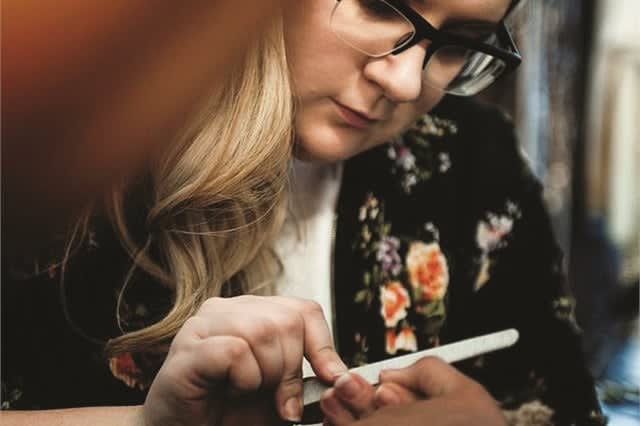
Working on set has grown my nail skills while allowing me to be a creative ambassador for the nail industry to the rest of the beauty industry, demonstrating that nail artists are serious professionals. (Photo by Sage Etters)
As a session manicurist, I’m often asked by other nail technicians how to begin working on set. Working behind the scenes can be an exciting way to share your creativity with the world, so I’m sharing some tips and tricks to get you photo-shoot ready. Every project can be different, so specific situations may vary, but the following are the basics I’ve learned over the past five years of working on print, TV, and film sets in Chicago.
HOW TO PREPARE
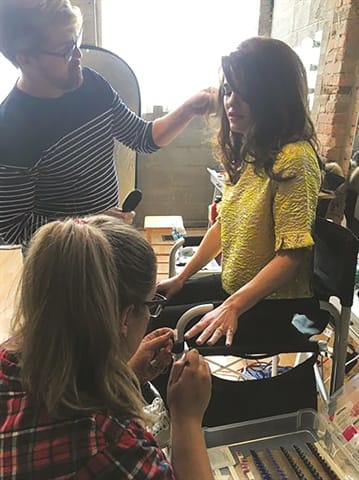
You’ll likely be working on your model in a small, non-traditional space, so pack your supplies to be easily accessible.
You’ll need to pack strategically as the traditional “two chairs and a table” station isn’t always available on set. You may be working on your model while other services are being performed, like hair and makeup, so plan accordingly. Pack everything you’ll need to perform a basic dry manicure and pedicure, along with polish choices in every color. This includes implements, treatments, brushes, and a way to hold them all. I usually come to set with a roller bag full of polishes in zipped organizer bags, and my tools and treatments in a plastic container that allows for easy access. Complete your kit with a couple of clean microfiber towels that can cover your workspace or the model’s lap to prevent filings and other debris from damaging the wardrobe.
WHAT TO EXPECT
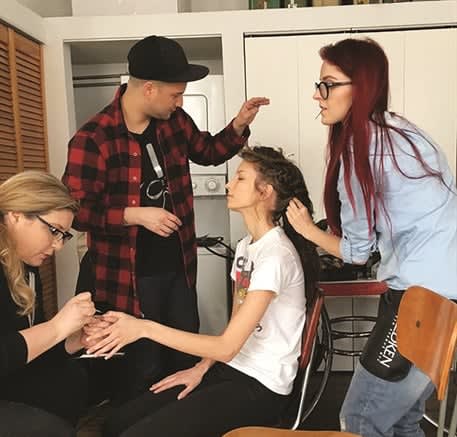
You’ll likely only have about 10 minutes to execute your nail look from start to finish, so bring products that work hard and have an idea in mind ahead of time!
The biggest difference between working in a salon and on set is the amount of time you have to complete a nail look. If it is a nail-centric photo shoot, you’ll likely have more time between looks to change the nails, but standard salon service times are much too long. There are shortcuts you can take to help with these time constraints. Since a photo shoot is more about how the nails look and not how long they’ll last, you can use tools like full cover tips, temporary adhesives, and base coat films to help speed up transitions. Have a few ideas in your head or sketched out ahead of time to ensure that you’re not spending precious minutes thinking about what you want to do. Expect to work with the other members of the team to determine the final look and how hair, makeup, wardrobe, and even props will all fit together to make the images the best they can be.
THE CREW: WHO'S WHO
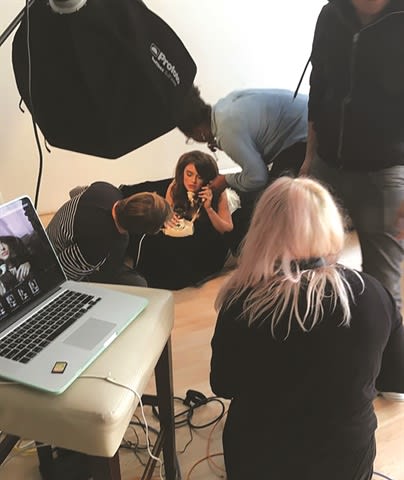
It takes a village to create a single image. On the best sets, everyone works together to achieve a cohesive final product.
Every project is a bit different, but depending on the shoot, one of three people is in charge: the photographer, the client, or the art director. The person in charge will likely present themselves when introduced, but if you’re not sure, ask who will be giving nail direction. Introduce yourself to everyone, and try your best to remember names.
Photographer: This is pretty self-explanatory, but the photographer is the one in charge of executing the images. The photographer handles the lighting, posing, and directs the model. The photographer is also the person who retouches or outsources the retouching of the images, and owns the copyright to the final images.
Producer: If there is a producer, they are in charge of the operation of the shoot. From assembling and hiring the entire crew to making sure there is food and a place for the model to change, the producer is the person who makes sure the shoot actually happens and runs smoothly.
Art director: The vision of the shoot is the responsibility of the art director. This is the creative professional who imagines the mood, story, and inspiration that guides the rest of the creative team.
Wardrobe stylist: The wardrobe stylist or “stylist” is responsible for the clothing, shoes, accessories, and jewelry on the shoot. They assemble looks that help guide the beauty team to create their work on the model.
Makeup artist/hairstylist: Sometimes this is the same person, sometimes it’s two artists. These creatives translate the inspiration into makeup and hair artistry on set. You’ll work closely with these team members to ensure the nails complement and complete the image, but don’t distract.
Model: The person who translates the vision of everyone on set into physical action. It is important to be kind to the model since she is the one making your work look amazing!
SHED SOME LIGHT
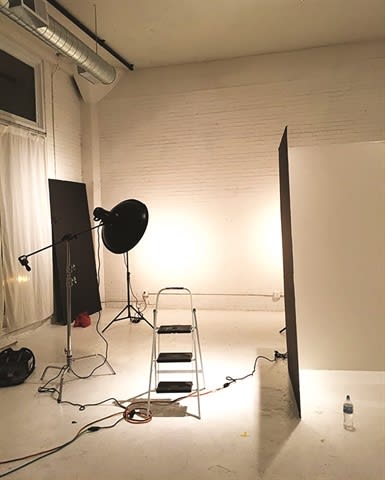
A basic studio set-up will look like a variation of this. Lights and cords and more cords.
The equipment on set can be a little intimidating, since there is usually so much of it! Be prepared for lots of lights, flashes, and temperature fluctuations. There may be monitors where you can see the images as they are being produced. The photographer will likely be using a very expensive camera and different lenses to achieve the images. I wasn’t ready for all of the terminology when I first began working on set, so I’m going to share some basics here.
Beauty: Imagery of the model’s face and hands, generally framed from the shoulders up.
Macro: Extreme close up shots of a part of the model’s face, for example, one eye with two nails, or her lips to show detail.
Three-quarter: When the image is framed to show three-quarters of the model’s body.
Cheat: A direction for the model to show something specific to the camera. Example, “cheat your hand to camera” which asks the model to turn her hand to the camera in her current pose.
Beauty dish: A type of light used for beauty imagery that wraps the model with light.
Post: After the shoot, where retouching happens. It’s short for post-production.
In camera: Refers to how the image looks before any manipulation or editing. As nail artists on set, we should always be working for perfection “in camera.”
Read: How something looks on camera versus how it appears to the eye. Some colors and finishes will read or look totally different on camera, like chameleon and shimmer finishes, neons, and dark colors.
MODEL MAGIC
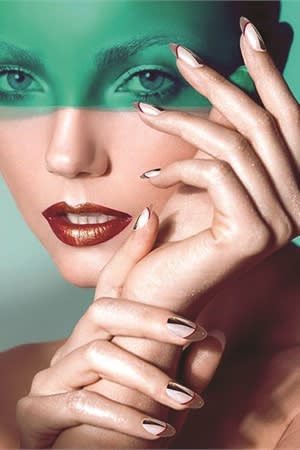
Marta is one of my favorite models to work with because she can pose and work her hands into very cool shapes. (Photo by Carissa Lancaster)
Working with models on set can be a varied experience. It is best to work with experienced models who know how to move and work their hands; however, that isn’t always possible. Ensure when you are creating your nail look that you take all angles into account (yes, even the underside!) as the camera will catch everything. Parts modelling agencies are the best source of hand models, along with social media. You can even source models from within your clientele, but they must be good at creating lovely shapes with their hands and fingers. You can search beauty imagery inspiration online to assist with pose ideas that will complement your nails.
THE NEXT STEP
If you’re serious about a career behind the scenes, you should begin by building a portfolio of professional images. Complex nail art is always tempting, but make sure your imagery also shows how well you can pull off a clean look. Look for beauty/portrait photographers in your area that test, meaning they regularly put together unpaid shoots where the crew can receive images for their books — it’s how everyone gets their start.
Nail tech Ashley Gregory is a session manicurist based in Chicago and the creator of The Nailscape blog.
Four publications for beauty industry professionals to enhance their leadership skills, financial awareness, professional growth, and joy!
The most successful salon suites balance personality, function, and comfort. Megan Communale of My Salon Suite shares her best advice for designing a space that supports your business goals and leaves a lasting impression on every guest.
Square data shows that regular customers tip 11% higher and are shared across 32% of businesses in the same ZIP code, driving thousands of dollars in additional revenue per connection.
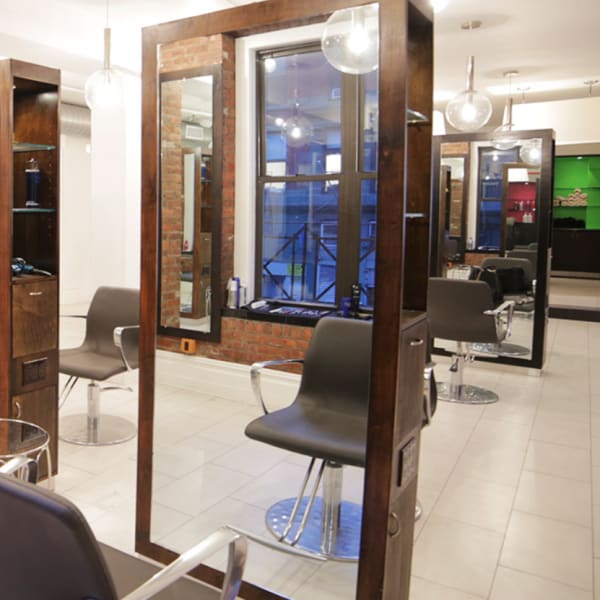
When Bowie Lau and Jeffrey Ching opened JBW Jeffrey Ching Salon in 2011, they weren’t just launching another luxury hair destination—they were building a business rooted in passion, artistry, and thoughtful growth.
Sponsored by Amex
Inside the Systems That Power an Elevated Salon Experience From seamless online booking to a team-first culture, J Gold Salon in Atlanta offers more than great hair—it delivers consistent, high-touch service with the help of partners like Boulevard and American Express.
Sponsored by Amex
Want to grow your career as a beauty professional? K18 Sales Manager Sabrina Sanborn shares advice on networking, mentorship, and self-advocacy—from attending hair shows to finding the right guidance to reach your goals.
A combination of clear policies, effective communication, and strong client relationships has helped me create a more reliable and efficient booking system.
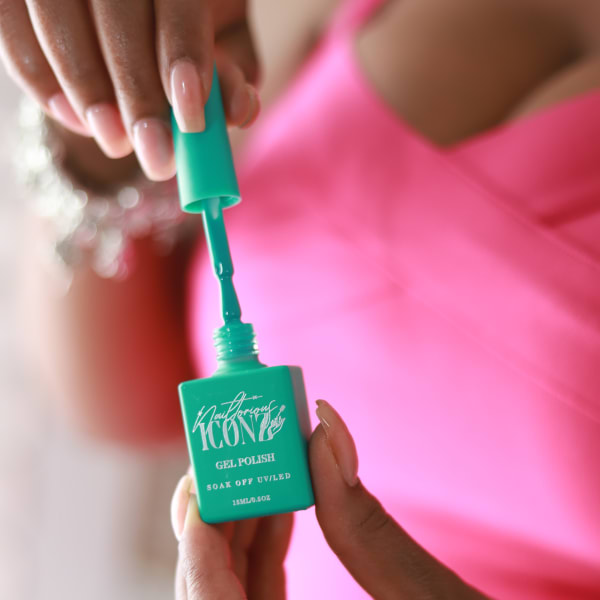
Founded by Cleveland serial entrepreneur Shaura Rodgers, Nailtorious has grown to include a nail supply megastore, training facilities, and retail line for nail techs.
This period after the holidays can bring on a huge lull for hairstylists. We asked Cosmo Prof's team of professionals to offer their best advice on how to deal with the January-February slow period.

Key highlights include a push toward inclusive spaces for all abilities, an emphasis on maximizing livable square footage, and a continued love for modern farmhouse exteriors.
The busy holiday season is here, and with it comes jam-packed days, last-minute client requests and booming retail sales. For many salon owners, the highlight of the season is Small Business Saturday® (SBS). This year on Saturday, November 30, consumers can take their shopping into the small businesses in their communities.
Sponsored by Amex
Want to become savvy about your personal finances, but don't quite know where to start? Anna Manukyan identifies six important concepts for building a strong financial foundation.
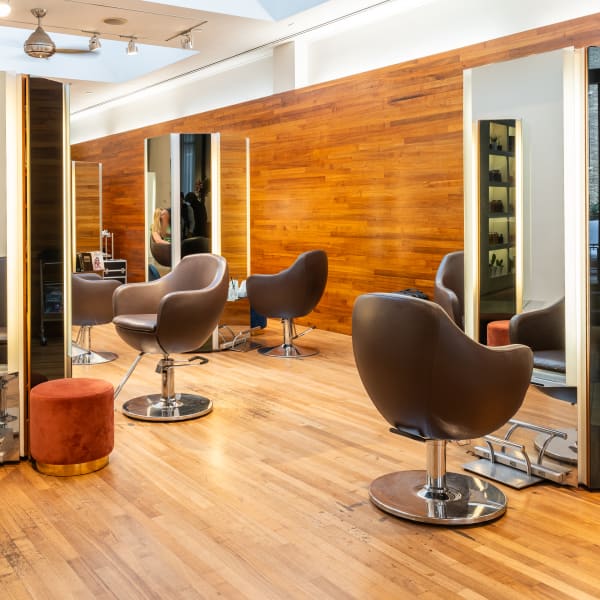
Salon owner Nuri Yurt had a dream of owning a salon on New York City’s Madison Avenue. "Through perseverance, hard work and stellar customer service, he and partner John Kaygisiz founded Toka Salon in 2007.
Sponsored by Amex

This guide is your one-stop shop for a plethora of technology tools, software and services created to keep your salon or spa thriving.
Anna Manukyan shares a breakdown of what different types of financial accounts should be used for.

Vagaro has consistently been at the forefront of salon software technology, helping businesses be more efficient, create more effective communication, and even improve company culture. Now, Connect by Vagaro, the platform’s two-way communication capability, and Vagaro’s new generative AI tools are giving owners new opportunities to grow and expand.
Sponsored by Vagaro
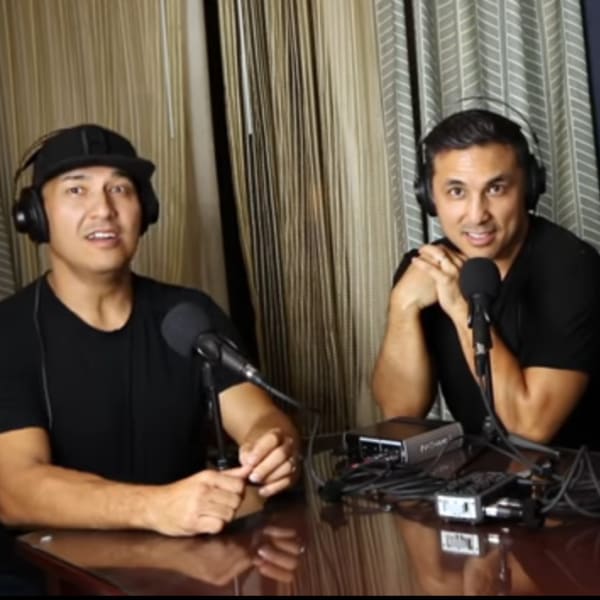
Young Nails' Greg, Habib, and Tracey discuss whether getting too close to clients can damage your business.