Boost Your Self-Esteem, Increase Your Salon Success
Do you find yourself taking things your clients and coworkers tell you personally? Are you occasionally irritable? Maybe your self-esteem could use a pick-me-up. Here’s how you can improve your attitude about yourself and in the process increase your salon success.
by Patricia Oropeza
December 1, 2004
6 min to read
Chances are you’ve been around the type of nail tech who seems to be in a perpetual state of bliss, is always positive, and always has something nice to say about others. Everything comes easy to her it seems. Meanwhile, you constantly find yourself irritated with your clients and your coworkers and you lack motivation to do anything but show up for work and do your normal, everyday tasks. How, you wonder, does she stay so perky?
It’s easy. She exudes confidence and has high self-esteem. And having high self-esteem allows you to recognize your successes and feel good about yourself.
Ad Loading...
So if having high self-esteem is so important, why don’t more of us have it? A recent Gallup poll revealed that 75% of the American population suffers from low self-esteem, and salon professionals are certainly not immune to it.
“Nail techs can get physically and mentally abused by their clients,” says John Amico, chairman of Amico Educational Concepts in Crestwood, Ill. “They can get you down by telling you their life stories. Clients want to deliver bad news because that’s what they want to talk about. They form interpersonal relationships with their nail techs and tell them things they wouldn’t even tell their sisters.”
Listening to all that bad news can lower your morale and self-esteem, causing you to find more faults with others (and yourself) than you normally would.
Of course, clients aren’t the only reason why a nail tech’s self-esteem might suffer. Family background also has a lot to do with it. “A lot of us had parents who had no training in raising us,” says Amico. “And if you come from a large family, the older children may be less well-adjusted than the younger ones because mom and dad became more flexible as they got older.”
We hear all this talk of self-esteem, but what is it exactly? For starters, it doesn’t mean having talent, potential, or achievement, says Amico. Rather, it’s a deep feeling of self-love, and the good news is that everyone can achieve a high dose of it.
Ad Loading...
The Power of Positive Thinking
Self-esteem is important in the professional beauty industry, where confidence and assertiveness matter. When you sit across from a person and hold her hand, you have to be convinced that what you’re doing is right or you’ll have a hard time asking a client to try a new service, pay a higher price, or tell her that her chronic lateness is a problem. Since you work in a salon, you deal with all sorts of clients throughout the day and some may be a bit harsher than others. If your self-esteem is high, their complaints and critiques will roll off your back. Instead of feeling like you’re constantly being attacked you’ll be proactive and wonder if there is any truth to the matter of your polish job being a bit too sloppy and do something about it.
“You are always going to get the brunt of other people’s emotions based on what their level of self-esteem is,” says Amico.“Simply look for the solution.” And having high self-esteem also means you’re more willing to take bigger risks and maybe turn that dream you’ve had of opening your own salon into a reality.
Plus, if you have high self-esteem, you’re a people magnet — and that can work to your advantage.“People love to be around people who are positive,”says Amico. “When you have a positive attitude you have the ability to empower individuals to do things they thought they could never do. You have people around you who want to see you become successful. They want to take your vision and be a part of it.”
If you lack self-esteem, you probably don’t have enough confidence in yourself to attempt to expand and move up in your career. So even if you’ve been thinking of becoming a manufacturer’s educator, for example, chances are you won’t attempt it because you’re afraid you won’t do a good enough job or won’t get the position. “You can’t have healthy relationships if you don’t love yourself,” says Amico. “And how can you move up? You can’t because you’re your own worst enemy.”
Ad Loading...
Boosting Self-Esteem
The next time you find yourself complaining about something that happened to you, put a stop to it.And don’t be so hard on yourself.
“Always compliment yourself on doing good deeds,” suggests Amico. “Find the best thing you did with every experience. Find something good about a negative experience and learn from it.” Amico suggests identifying 10 good things you did every day and writing them down. That includes listing such things as getting up in the morning and getting to work on time.
“Praise yourself,” says Amico. “You can’t wait for other people to pat you on the back. If you don’t do it enough to yourself you won’t be able to do it to anyone else.”
Self-affirmations, statements that are written and repeated in the present tense as though the result was already realized, also work wonders on the soul. “With self-affirmations we are controlling our subconscious,” says Amico. “The more positive things we say about ourselves, such as, ‘I love myself totally and unconditionally,’ the more we lead ourselves to become it.”
Ad Loading...
Self-affirmations are ongoing and can change, so something you may have been telling yourself at first may evolve and change into something else a few years down the line, especially as you begin to grow in your career.
Remember, having a good dose of self-esteem can do wonders not only for your soul, but for your career as well.And don’t think that you’ll feel like a new person from one day to the next. It’s an ongoing process, but with time and practice Amico says you can nurture yourself to be whom and what you want to be.
The Signs of Low Self-Esteem
Often, when someone is complaining, avoiding, or judging another, it’s because they suffer from low self-esteem. Could your self-esteem also benefit from a boost of positive energy? Although there are lots of indicators, the following are some of the most prevalent signs of low self-esteem:
Making little or no eye contact. Someone who shifts her eyes and is unable to make direct eye contact is communicating low self-esteem, not to mention communicating an intention to avoid connecting with others.
Not accepting compliments well. Responding to a compliment with a statement of denial is another sign of low self-esteem. When you feel good about yourself you happily accept praise.
Constantly apologizing and feeling guilty. Apologizing often goes hand in hand with feeling guilty. The guiltier you feel, the worse you feel about yourself, and the worse you feel about yourself, the guiltier you feel.
Becoming easily frustrated, impatient, or angry. When you don’t feel good about yourself, you tend to have little patience with others. This lack of patience and understanding for others creates a breeding ground for many possible negative responses.
Using negative language. Low self-esteem seeps into one’s daily language. Negative, hopeless, low self-esteem language includes phrases such as: “It figures,” “I can’t,” “I should have,” etc.
Feeling depressed. If you are battling depression, chances are you are having trouble seeing the positive in any situation. If you are experiencing prolonged periods of sadness or hopelessness, consult a medical professional.
Taking things personally. The lower your self-esteem, the more you will feel unsure about yourself. Someone with high self-esteem will not take other people’s opinions and comments to heart.
Keeping to yourself. Your lack of belief in yourself may motivate you to hide away from reality or cloister yourself away from others.
Not taking risks. People with low self-esteem fear failure and worry about looking bad.
Ad Loading...
List courtesy of CoachVille, a community for coaching, coaches, and coach training.
Uncured gel polish and microscopic e-file dust contain active acrylates that penetrate the skin, triggering permanent contact dermatitis. Learn the chemistry behind these irritants and how to protect your clients and yourself.
The Good Patch is a leading wearable wellness patch brand, offering wellness and skincare patches that support everyday needs including energy, sleep, relaxation and more.
Orthopedic PT reveals three daily exercises plus ergonomic advice that can help salon professionals avoid the aches and injuries caused by standing, bending and repetitive overhead work.
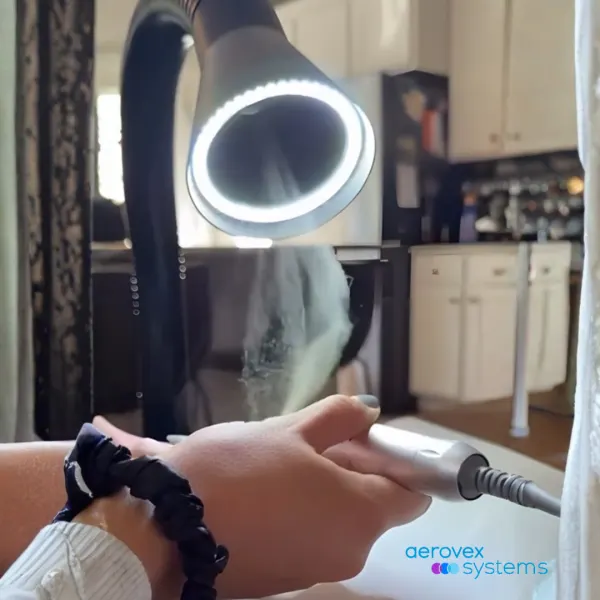
From acrylic monomers to airborne bio-dust, the air inside a nail salon carries risks most professionals never see coming. Aerovex Systems reveals the source-capture and room-purification strategies that are setting a new standard for salon safety.
Working in beauty doesn’t have to hurt. Learn how Somatic Movement helps hairstylists, lash artists, and other beauty pros release tension, improve posture, and extend their careers.
As a spa or salon professional, your clients expect more than just beauty—they expect safety, hygiene, and peace of mind. Fungal infections like Athlete’s Foot and Nail Fungus are more common than you think, especially in environments where tools and footbaths are reused without proper sanitation. This blog covers how to stop these issues before they start, using proven infection prevention strategies for salons and spas.
A federal initiative aimed at studying chemical exposure in nail salons has ended due to staffing and budget changes. Here’s what the project set out to do—and what its conclusion means for salon professionals.
For many people, a pedicure is a relaxing beauty ritual. But what most don’t realize is that this simple service, if done without proper hygiene and sanitation, can cause serious infections and long-term health issues.
Onycholysis is the separation of the nail plate from the nail bed. While it may look painful, it typically isn’t—at least not at first. But without proper care, this common nail disorder can lead to infections, deformities, and long-term damage.
Mckenzie Kool, Psychologist, MC, RPsych provides us with guidance on what may or not be helpful in speaking with someone who has suffered a significant loss.
Clients come to you to feel their best—not leave with a viral souvenir. Warts and cold sores can spread fast in busy salons, but a few smart habits make all the difference. Let’s talk about what’s really lurking in your salon (and how to kick it to the curb).
As Earth Day approaches, The Green Beauty Community Foundation and the Green Spa Network invite beauty pros to step forward and embrace sustainability through the Green Pledge--a powerful initiative designed by and for beauty industry leaders.
Don’t cancel Valentine’s Day altogether, urges Jill Palmquist. Instead, think of it as a (frilly, flowery, Champagne-bubbly) wake-up call to fall deeply in love with your own life.
Life coach and Culture Ambassador of Sam Villa, Andrew Carruthers, outlines how to tell if your burnout is temporary - or if it's time to make a bigger career change.