Achy shoulders, numb thumbs, sore muscles, and persistent exhaustion. Sometimes aches and pain seem like an unavoidable by-product of doing nails. One nail tech disagrees.
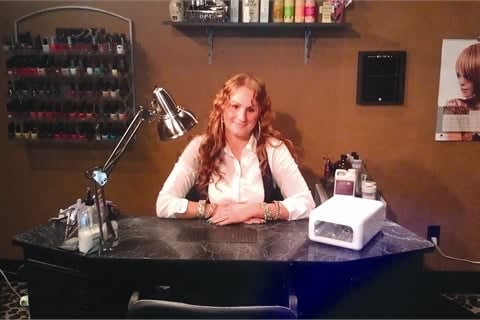
After seven years of doing nails, Leanne Brown of Regina, Saskatchewan, Canada, began to notice numbness in her hands and thumbs. She continued working, but six years later, she realized not only had the numbness increased, but sore shoulders, exhaustion, and reduced efficiency were added to her list of ailments. She made an appointment with a doctor, fully expecting to hear she had carpel tunnel. Instead, the doctor referred her to a hand clinic. “The physical therapist said the problem wasn’t my hand at all,” says Brown. “The problem was actually coming from the chest.”
Physical therapist Norma Doerksen told Brown that her trouble was the result of her chest being constricted for long periods of time, and the constriction came from the way she rolled her shoulders forward when she worked. Her posture compressed a neurovascular structure, disrupting the signals the nerves were sending down to the hands and causing numbness and tingling in her fingers and thumbs. “The constriction caused by poor posture also caused tightening in the anterior neck muscles that affected her breathing pattern,” says Doerksen. Brown was taking shallow breaths in the top of her chest instead of taking deep breaths into the lungs. Over time the ongoing pain and sensory changes affected her energy and pain level, says Doerksen.
Ad Loading...
Working with Doerksen, Brown began treatment that includes proper stretching and soft tissue mobilization, breathing techniques, and biofeedback. She also receives treatment from a registered massage therapist. Doerksen performs myofacial and soft tissue massage along with laser therapy, which stimulates Brown’s pressure points using a laser instead of a needle. The biofeedback component of her treatment is delivered through software that assists in breathing techniques and relaxation, created by Wild Divine, Healing Rhythms. A video is played of rhythmic movement, such as waves, and Brown breathes in and out in sync to the video. Sensors attached to Brown detect the body’s physiological response. The program responds to the changes in Brown’s heart rate; when her heart rate lowers enough for the computer to register the relaxed rate, it moves on to the next exercise in the program. This teaches Brown the proper timing of her breathing.
Along with therapy at the rehab center, Brown faithfully performs daily stretches and breathing exercises prescribed by Doerksen. She says what she learned has helped her immensely. In only three weeks, she saw improvement in her sleep patterns, in her energy level, and in the soreness of her body. In addition, she has increased her service times at work, returning to the speed she worked at before her pain began. Brown believes all nail techs can benefit from the simple exercises she learned during her treatment. “It’s so important that we take care of ourselves as well as our clients,” says Brown. “This is changing my life and career for the better, and I think all nail techs can benefit from the exercises I’m learning.”
We’ve listed some of the easy-to-implement exercises Doerksen prescribed for Brown. Techs can perform the stretches at work and home to offset the aches and pains often viewed as an unavoidable side effect of being a nail tech. Doerksen says that while the exercises would undoubtedly be beneficial to any nail technician who struggles with proper posture, they should not be viewed as a treatment plan. “Any nail tech who experiences soreness, numbness, or tingling should seek the opinion and advise of a professional therapist or doctor,” says Doerksen.
Breathing properly and stretching regularly throughout the day will result in improved circulation and more energy. However, it will be difficult to experience satisfying results if the desk and chair prevent a tech from working with the proper posture. Brown had the advantage of having her work station evaluated to see where she could make ergonomic improvements. She was told she was sitting up too high and was too far away from her client. She remedied that with a new desk, which has a section removed from the middle so she could be closer to her client, plus, she purchased a chair that allows her to sit lower.
In the Salon
Ad Loading...
Deep Breathing Take slow deep breaths in through the nose and out through the mouth starting with a count of two in and two out. Breathe deeply to the bottom of the lungs. To know if you’re breathing deeply, watch your stomach and chest as you inhale. If your chest expands, your breathing is shallow. Try to breathe deeply to the bottom of the lungs and feel the lower ribs expand and your stomach stretch out. Don’t worry about doing this in front of clients. Brown says she often gets her clients to breathe with her! Gradually work your way up so you can inhale and release to a count of six.
Scapular Mobility Shrug shoulders up and down five times. Roll the shoulders in a backward direction and squeeze the shoulder blades together at the back. Repeat five times.
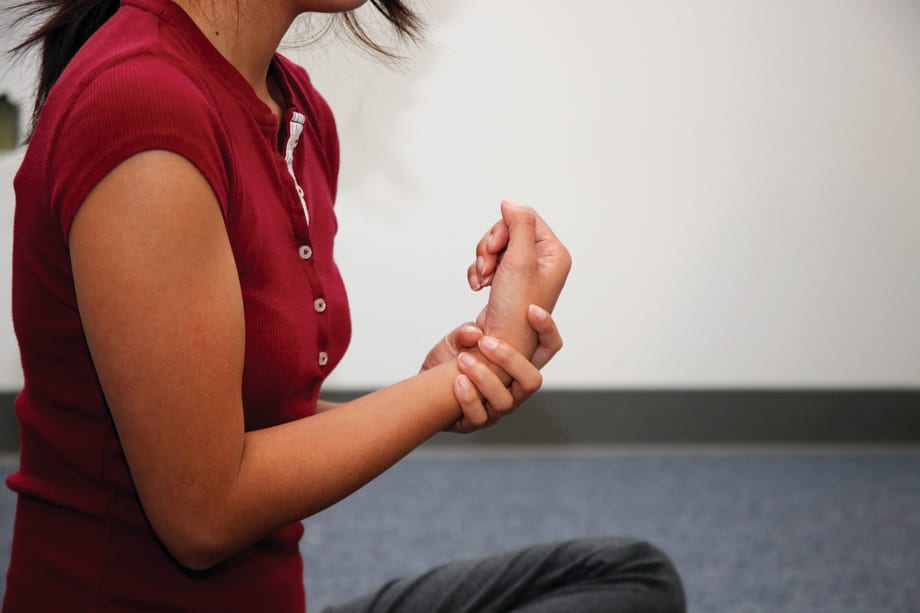
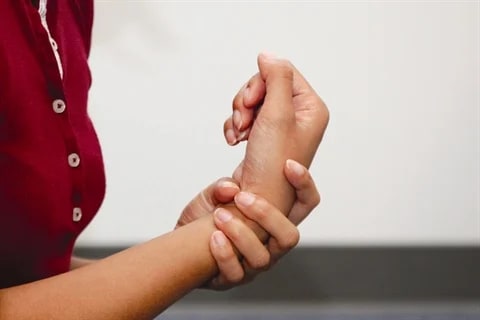
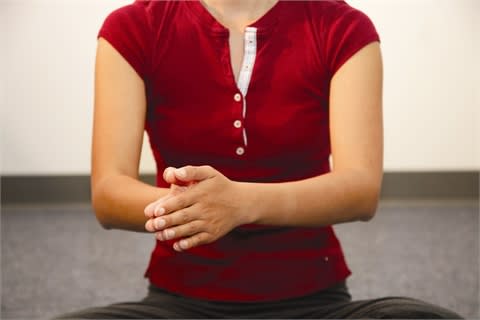
Wrist Fishy Several times a day, put palms of the hands together and gently “swim” them away from your body like a fish swimming in the water gliding from side to side to mobilize the wrist and gently glide the median nerve.
At Home
Button in Your Back Lay on your back with a pillow under your head and knees bent up with hands resting on your stomach. Imagine two buttons on the back of your shoulders and gently press the “buttons” down to the floor to open the chest and stretch the pectoralis muscles. Hold for one breath and relax. Repeat three to five times.
Ad Loading...
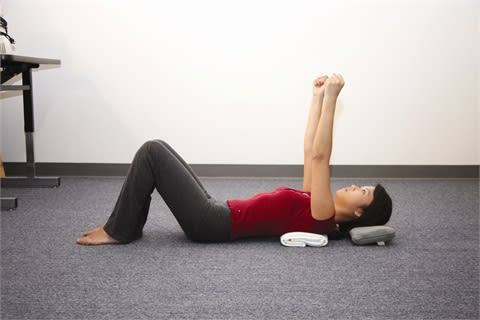
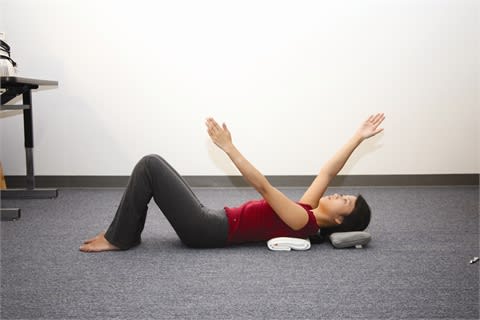
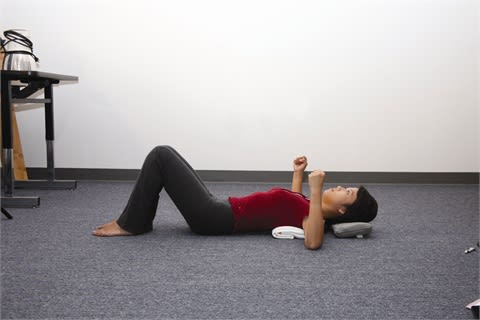
Thoracic Mobilization For these three exercises, lie on your back with knees bent and feet on the floor. Place a pillow under your neck for support and a small rolled towel vertically in the center of the spine. Keep stomach muscles tight and do not let the low back arch. Keep the lower back to the floor. Repeat each exercise five times.
Exercise 1: Raise arms in the air as if you’re lifting something. While inhaling, lower arms overhead to the floor. Exhale as you return arms to raised position.
Exercise 2: Raise arms in the air as in the first exercise, but this time, raise only the right arm overhead while lowering the left arm to the floor by your thigh.
Exercise 3: Lie with elbows out to the side at a 90-degree angle. Raise and lower your arms as if you’re lifting weights.
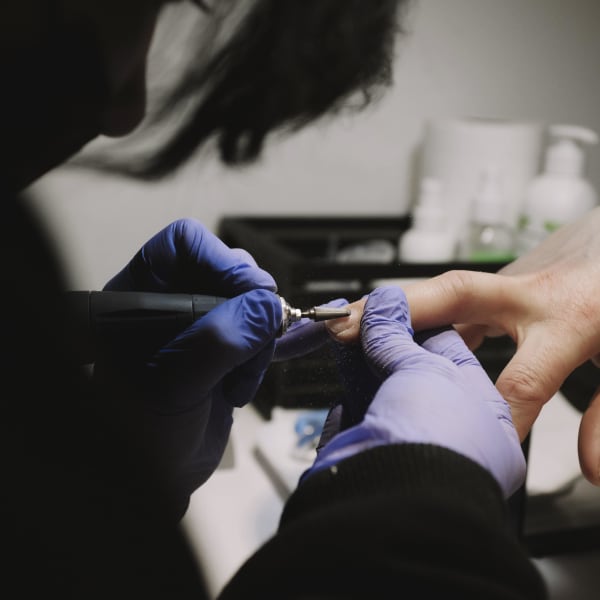
Uncured gel polish and microscopic e-file dust contain active acrylates that penetrate the skin, triggering permanent contact dermatitis. Learn the chemistry behind these irritants and how to protect your clients and yourself.
The Good Patch is a leading wearable wellness patch brand, offering wellness and skincare patches that support everyday needs including energy, sleep, relaxation and more.
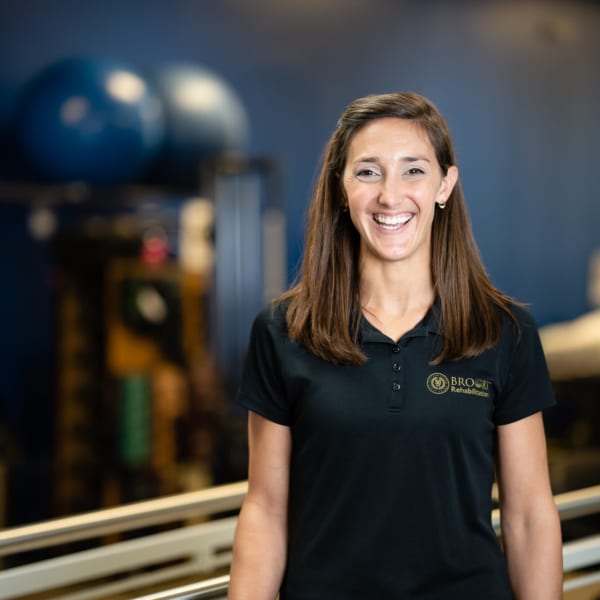
Orthopedic PT reveals three daily exercises plus ergonomic advice that can help salon professionals avoid the aches and injuries caused by standing, bending and repetitive overhead work.
From acrylic monomers to airborne bio-dust, the air inside a nail salon carries risks most professionals never see coming. Aerovex Systems reveals the source-capture and room-purification strategies that are setting a new standard for salon safety.
Working in beauty doesn’t have to hurt. Learn how Somatic Movement helps hairstylists, lash artists, and other beauty pros release tension, improve posture, and extend their careers.
As a spa or salon professional, your clients expect more than just beauty—they expect safety, hygiene, and peace of mind. Fungal infections like Athlete’s Foot and Nail Fungus are more common than you think, especially in environments where tools and footbaths are reused without proper sanitation. This blog covers how to stop these issues before they start, using proven infection prevention strategies for salons and spas.
A federal initiative aimed at studying chemical exposure in nail salons has ended due to staffing and budget changes. Here’s what the project set out to do—and what its conclusion means for salon professionals.
For many people, a pedicure is a relaxing beauty ritual. But what most don’t realize is that this simple service, if done without proper hygiene and sanitation, can cause serious infections and long-term health issues.
Onycholysis is the separation of the nail plate from the nail bed. While it may look painful, it typically isn’t—at least not at first. But without proper care, this common nail disorder can lead to infections, deformities, and long-term damage.
Mckenzie Kool, Psychologist, MC, RPsych provides us with guidance on what may or not be helpful in speaking with someone who has suffered a significant loss.
Clients come to you to feel their best—not leave with a viral souvenir. Warts and cold sores can spread fast in busy salons, but a few smart habits make all the difference. Let’s talk about what’s really lurking in your salon (and how to kick it to the curb).
As Earth Day approaches, The Green Beauty Community Foundation and the Green Spa Network invite beauty pros to step forward and embrace sustainability through the Green Pledge--a powerful initiative designed by and for beauty industry leaders.
Don’t cancel Valentine’s Day altogether, urges Jill Palmquist. Instead, think of it as a (frilly, flowery, Champagne-bubbly) wake-up call to fall deeply in love with your own life.
Life coach and Culture Ambassador of Sam Villa, Andrew Carruthers, outlines how to tell if your burnout is temporary - or if it's time to make a bigger career change.